


From Princess Milica’s 1906 royal tee-off to Luštica Bay’s modern golf course, Montenegro’s golf story is one of friendship, family and rediscovered legacy.
CONTENTS
A group of friends, family and royal legacy
How a group of friends and family, and a royal legacy, grew the game of golf in Montenegro.
In the high, wild greens of Luštica Bay, where the mountain wind meets the crisp air of the Adriatic, Risto ‘Miško’ Lučić stands over his golf ball. A breath in, a meditative pause, and then the swing. Ping. A clean, sharp arc sends the ball soaring into the horizon.
Miško didn’t find this game until later in life, but it took hold of him with a startling speed. “It was love at first swing,” he says, his voice carrying the energy of a man who has spent his days in pursuit of athletic excellence.
A former basketball player and lifelong sportsman, Miško is a pioneer of golf in Montenegro. Alongside his wife Silva, and a few determined souls such as Slavoljub Čekić and Goran Radović, Miško set out to plant the seeds of golf in a land where the traditional pastimes are sailing and bocce. Together, they founded Montenegro’s first golf club, Knjaginja Milica. It wasn’t about prestige or memberships, just friends having a shared passion for the game and deciding that was enough to start a community.
“It’s not difficult to convince people that golf is a beautiful and engaging sport,” says Miško. “You just need to give them the opportunity to try. Once they do, they fall in love. It gives back to everyone in its own way.”
The days of containers and German balls
Before the manicured greens of Luštica Bay transformed the landscape, the birth of Montenegrin golf was a gritty, grassroots affair. There were no clubhouses, no professional shops, and certainly no luxury facilities.
“We rented land in Krimovica, a local village,” Miško recalls. “There was nothing there at first, but we built an improvised driving range, cut the grass ourselves, stored our equipment in containers, and ordered kit from abroad, waiting weeks for it to arrive.”
In those early days, the community was sustained by a unique brand of necessity. “Slavoljub had a spare set of golf clubs and offered them to me until I could buy my own. It was a time when equipment was not easy to obtain, but in golf there’s an unwritten rule: we help each other. Golf balls were also a particular challenge. A friend from Germany would bring us used ones and off we’d go.”
The turning point
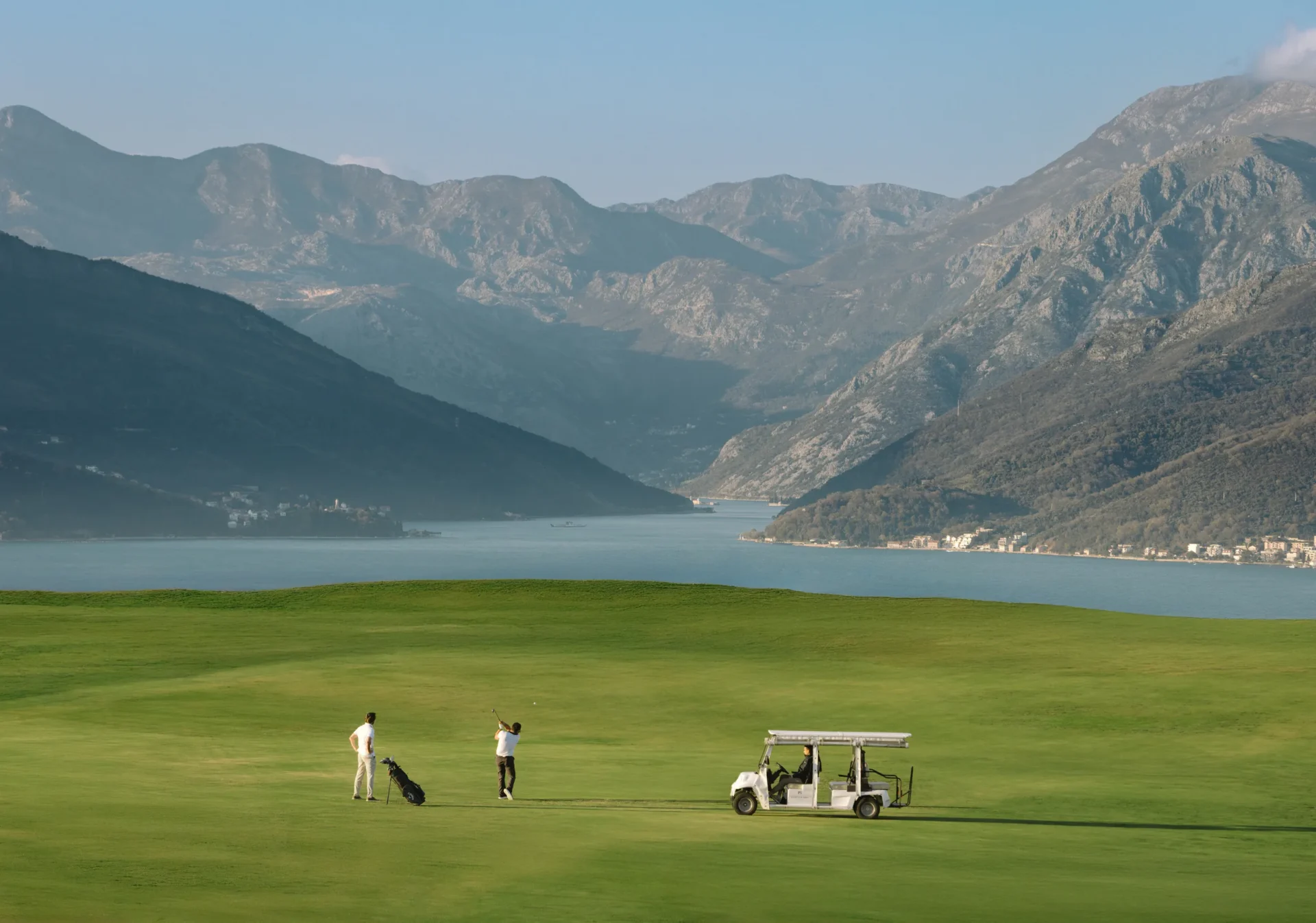
With the arrival of Luštica Bay’s Gary Player-designed course, golf is transitioning from a hidden hobby into an international draw. For Miško, now a Golf Ambassador within the community, the geography of the course is a point of immense pride.
“I would come here for hours while the driving range was still being prepared,” he says. “In all kinds of weather – the sun, the wind – just to practice. What a privilege it is to play on a course with sea views from every hole.”
The upcoming 18-hole course, with its dramatic elevations and rugged beauty, is the modern face of a sport that actually has deep, royal roots in Montenegro: in 1906, Crown Princess Milica opened the country’s first club in Cetinje.
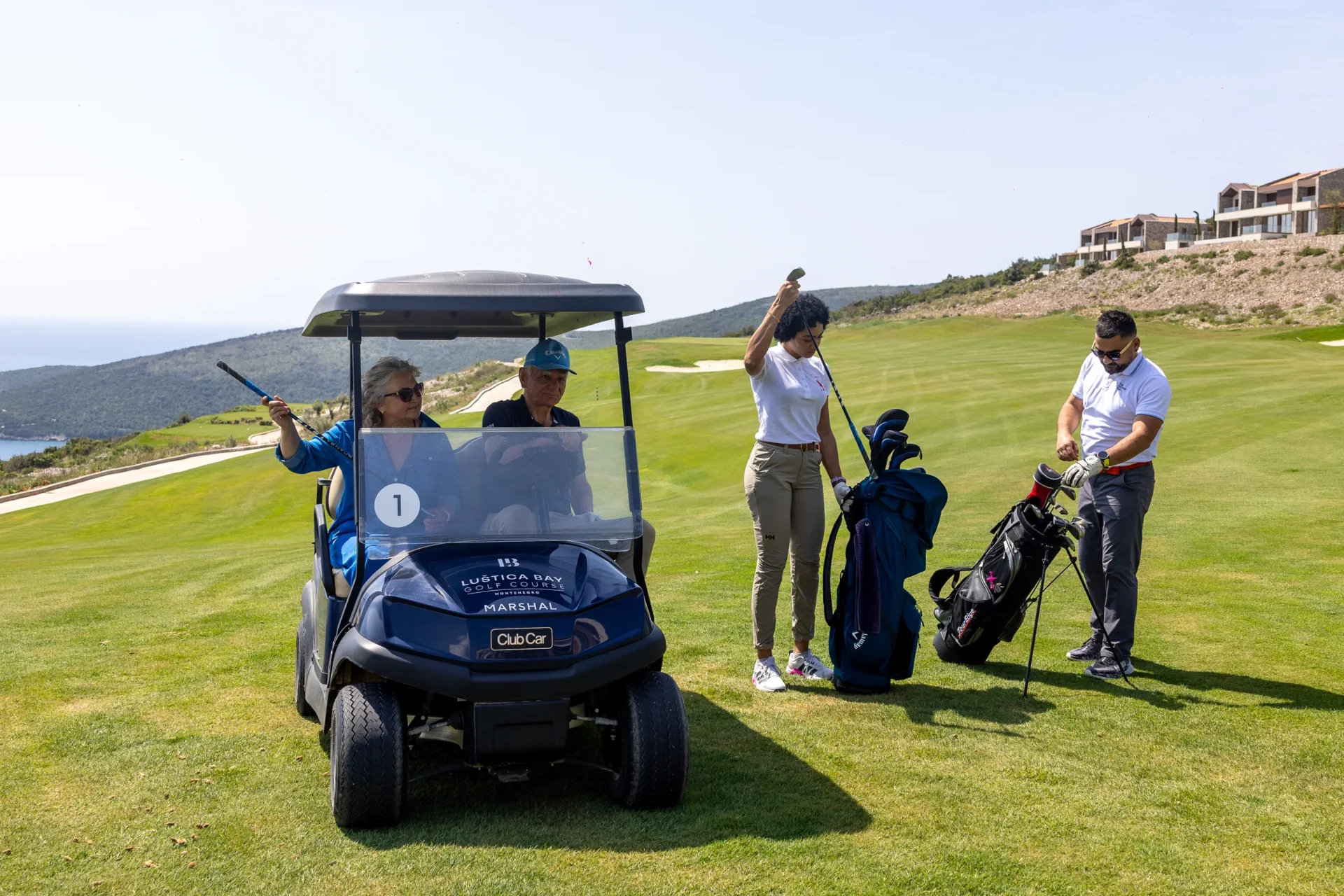
Today, Miško is helping the next generation rediscover that legacy. On a recent afternoon, when we spoke to Miško for this article, sixty local schoolchildren were visiting the course to try their hand at golf for the first time. In a moment of pure chance, a visiting American golfer named Richard Gadbois was so moved by the sight that he offered to donate ten sets of equipment on the spot.
Afterwards, Miško told us: “I truly feel this course emotionally. My greatest satisfaction today is inspiring children to learn and experience this sport.”
Less than 10% of courses in the world have this, but here we are in Montenegro, leading the way. I could never have dreamed this when I first picked up a club. – Miško
A game for generations
That extends to his own children: Milan, Ivan, and Matija.
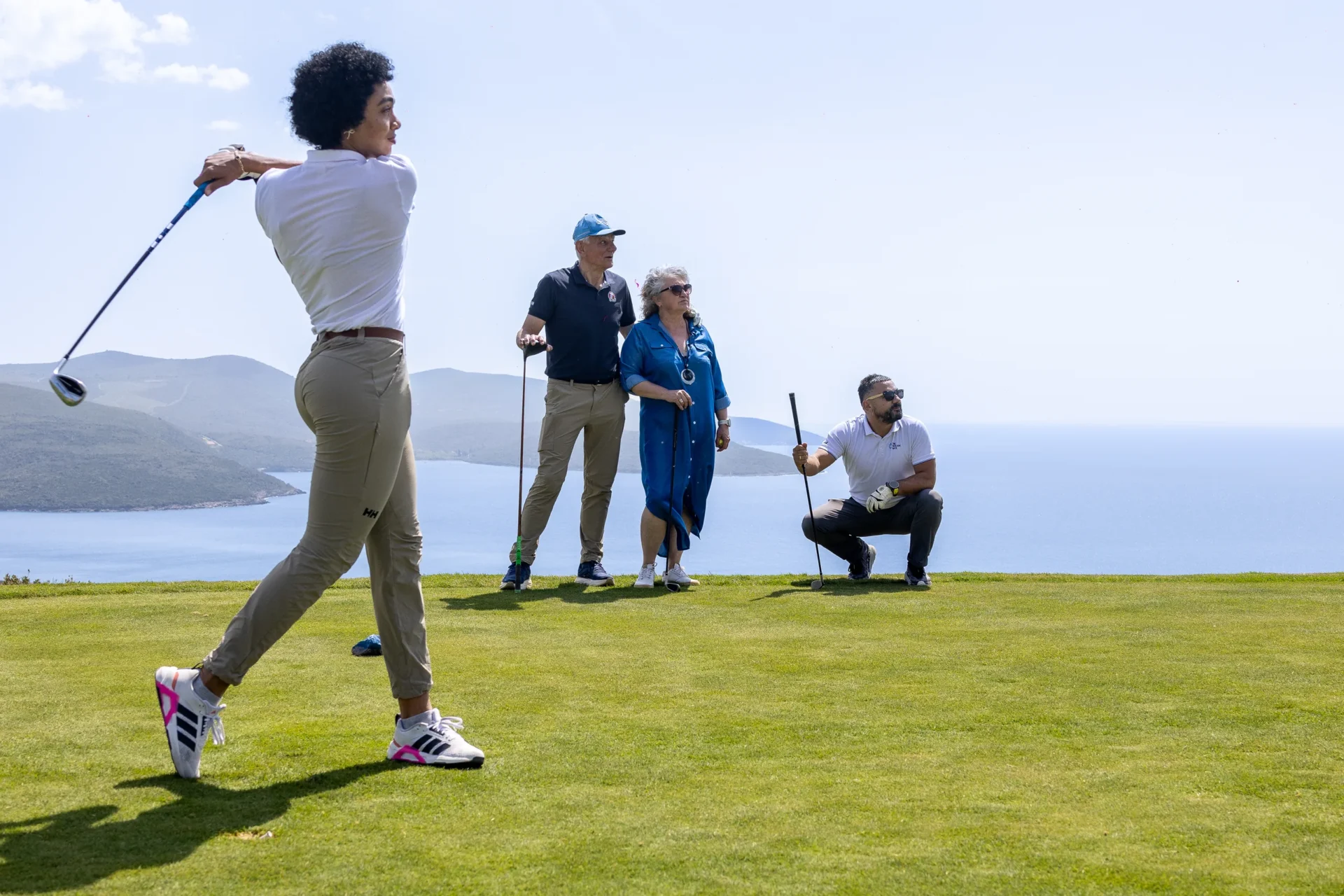
Matija and Ivan play alongside their wives and their parents. “In golf, we are divided into gentlemen and ladies,” says Miško, “but we are all equal, and relationships are stronger when couples play together.”
On the day we joined them, Milan was lining up his first-ever shot. There was no heavy coaching, just that specific kind of family silence when everyone is watching but no one wants to sneeze or breathe too loudly to break the spell.
Ivan, Miško’s middle son, knows that silence well.
Growing up on the coast, he was used to the physical demands of the sea, but golf offered something different – a kind of quiet he hadn’t found elsewhere. “My father didn’t push me into playing,” Ivan explains, “he introduced me through time spent together. What attracted me was the sense of peace. There’s no noise, no pressure like in other sports, yet it demands focus and discipline. Very quickly I realised that in golf, you compete mostly against yourself. I loved that.”
As a family, golf has become our shared space where we were all on the same wavelength. Conversations are had and advice is shared. I’ve learned how to play, but also how to think and enjoy the moment.
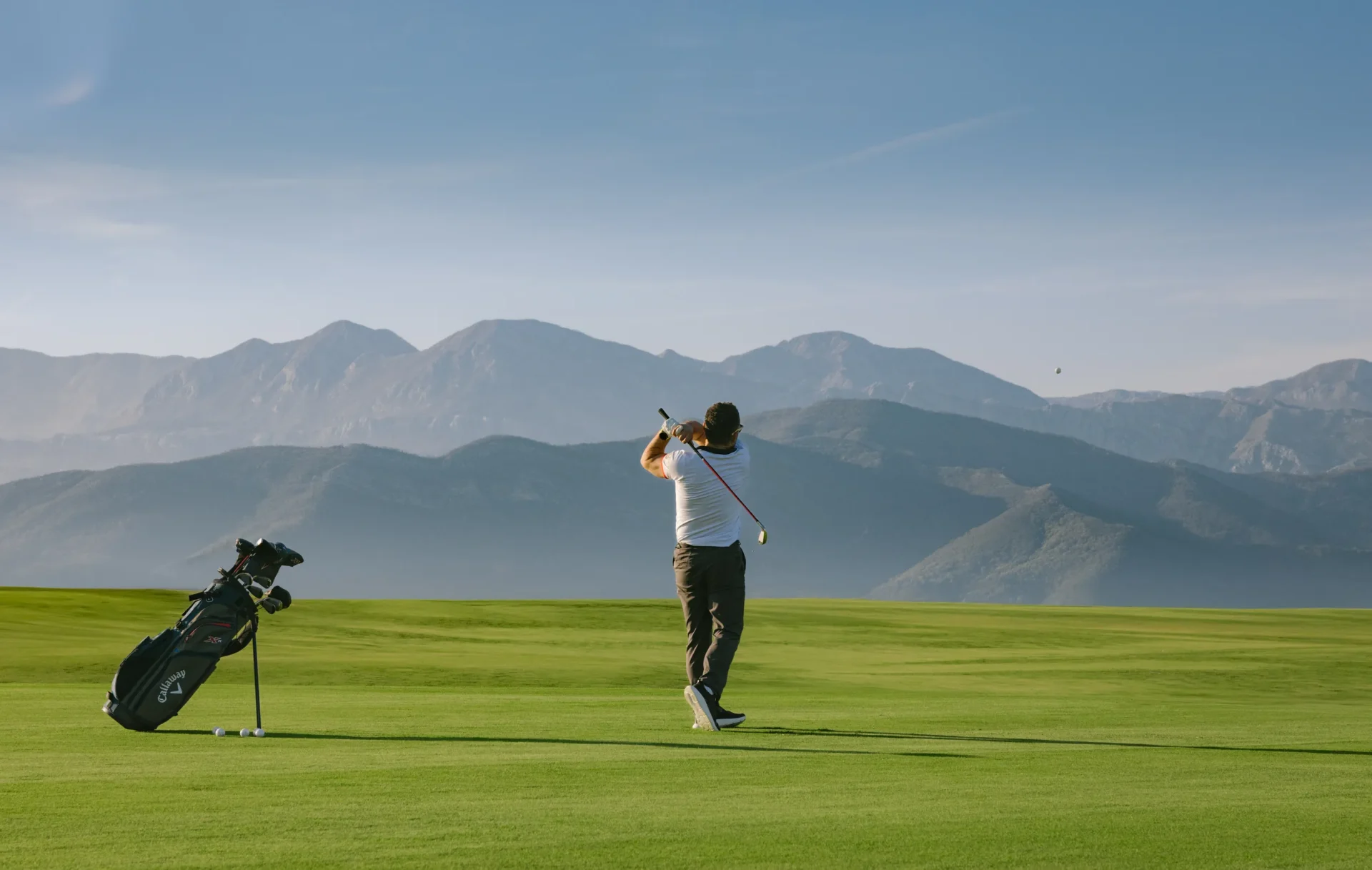
That wavelength now includes Ivan’s wife Jennifer who moved to Montenegro from Cuba. Her introduction to the sport at Luštica Bay was less of a slow burn and more of an immediate fit. “It was almost unbelievable how quickly she picked it up. Even on her first day she could do things better than me! She has what golfers call ‘a great swing’.”
Ivan still spends as much time on the sea water as he does on the grass and, to him, the two are essentially the same pursuit. “Both connect you with nature. In sailing, you read the wind. In golf, you read the terrain. In both, patience, timing and emotional control are everything.”
“There are no excuses in golf because every result is yours. It teaches you to accept mistakes, stay calm and move forward.”
A royal tee-off
120 years ago, Montenegro was already a pioneer of so-called ‘gentlemanly sports’ such as skating and tennis. Then, on 6th July 1906, Princess Milica took the first golf swing in Cetinje, opening a club – likely the first in this region – that welcomed diplomats and royals alike. The ceremony was a whirlwind of champagne, military music, and quadrille dancing. Today, the ‘stick’ Princess Milica used is still preserved in the Museum in Cetinje, a reminder that golf here is not a new trend, but a century-old legacy being rediscovered.
Playing the Montenegrin way
Golf is certainly moving forward in Montenegro, but it’s doing so with a camaraderie planted in the soil of those early, improvised days.
“The atmosphere among early golfers in Tivat is truly special. Supportive and motivating,” Ivan says. “As the sport grows, we all share the same desire to elevate it.”
Indeed, it is a rare thing to witness the birth of a tradition in real-time. What started as Miško’s “love at first swing” has rippled outward, becoming a connective tissue between fathers and sons, husbands and wives, and a growing circle of friends who have taken a global sport and made it local.
They’ve shed the sport of its stiff, country-club formalities and dressed it in something more Montenegrin: plenty of salt air, laughter that is carried by the wind, and the kind of easy-going patience you only find by the sea.