


Interest in living in Montenegro has increased steadily over the past few years. Once viewed primarily as a seasonal coastal destination, it is now attracting retirees, second-home buyers and long-stay residents from the UK, the United States and across Europe who are considering a more permanent change.
The appeal is practical. Montenegro combines coastal living, a Mediterranean climate, use of the euro and relatively accessible residency pathways — all within a compact and manageable country. For American buyers in particular, the possibility of owning property in a European setting at prices still below much of southern Europe has become increasingly relevant.
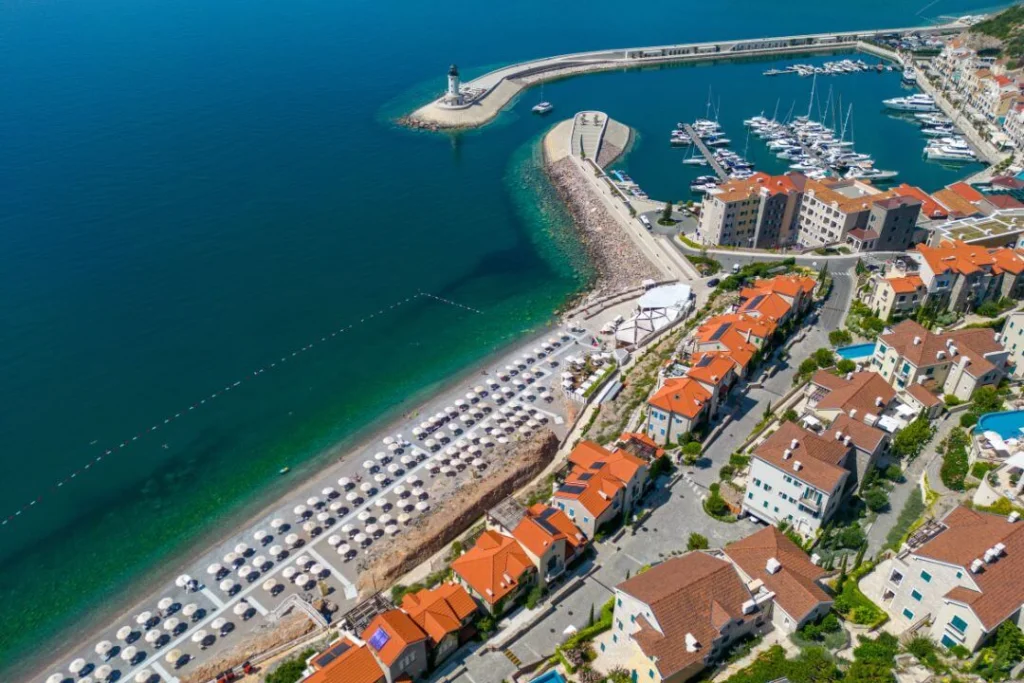
Developments such as Lustica Bay reflect how modern infrastructure and year-round amenities are evolving alongside traditional towns.
If you are considering moving to Montenegro in 2026, this guide outlines how daily life functions, how residency currently works, what has changed under immigration law and what to evaluate before making a long-term decision.
TABLE OF CONTENTS
1. Why Are People Moving to Montenegro?
Relocation interest is rarely driven by one factor alone. Most people cite a combination of climate, lifestyle change and long-term financial considerations.
Montenegro offers direct access to the Adriatic coastline and mountain landscapes within a short drive of each other. For UK residents, remaining within relatively easy reach of Europe is a practical advantage. For Americans, the appeal often lies in experiencing European coastal living at price levels well below France, Italy or parts of Spain.
Many second-home owners begin by spending part of the year in Montenegro before exploring longer stays. The country’s smaller scale is part of its character — distances are short, communities are familiar and daily routines move at a measured pace.
Montenegro does not compete with major European capitals. That distinction is precisely part of its appeal.
2. What Is Daily Life Like in Montenegro?
Daily life differs between the coast, the capital and the northern mountain regions, but certain patterns are consistent across all three.
Outdoor activity plays a central role. Social life centres around cafés and waterfront promenades. Summer brings higher visitor numbers, while winter is quieter and more local in character.
Coastal winters are milder than in much of the UK, though not warm year-round. Northern areas experience colder conditions and significant snowfall — making them among the region’s most popular skiing destinations.
English is widely spoken in tourism-focused areas. Everyday administration, however, may require some familiarity with Montenegrin, particularly outside larger coastal towns.
Montenegro is not structured around large metropolitan systems. Those seeking extensive public transport networks or highly digitalised administration may find the pace different from what they are used to. For many, this is precisely the attraction.
3. Best Places to Live in Montenegro
Choosing the right location depends on your lifestyle priorities. Here is a quick overview of the main areas expats and second-home buyers consider:
| Location | Best For |
| Tivat | Modern coastal living, international airport, expat community |
| Kotor | Historic setting, UNESCO Old Town, slower pace |
| Budva | Nightlife, tourism infrastructure, central coast |
| Podgorica | Year-round living, capital city, business hub |
| Lustica Peninsula | Resort-style communities, nature, Lustica Bay development |
| Herceg Novi | More affordable prices, established expat community |
| Zabljak / North | Mountain living, skiing, cooler climate year-round |
4. Cost of Living in Montenegro (2026)
Living costs in Montenegro are typically lower than in much of Western Europe. The figures below reflect approximate monthly averages in 2026 for a single person living on the coast. Costs vary considerably between prime coastal areas and inland towns.
| Expense | Monthly Average (2026) |
| Rent — 1-bedroom, coastal town | EUR 600 – 1,200 |
| Rent — 1-bedroom, Podgorica | EUR 400 – 700 |
| Utilities (electricity, water, internet) | EUR 100 – 180 |
| Groceries | EUR 250 – 400 |
| Dining out (per meal) | EUR 10 – 25 |
| Private health insurance | EUR 60 – 150 / month |
| Monthly transport pass | EUR 30 – 50 |
| Gym membership | EUR 25 – 50 |
A single person living modestly can manage on EUR 1,200–1,600 per month outside prime coastal areas. Couples or those in premium locations should budget EUR 2,000–3,000 per month.
Costs in Tivat, Budva and the Lustica Peninsula have risen in recent years due to increased international demand. Inland towns and Podgorica remain considerably more affordable.
Sources: Numbeo — Cost of Living in Montenegro (updated Mar 2026) | Mini Condos — Cost of Living 2026
5. Residency and Legal Considerations
- Employment
- Establishing a company
- Family reunification
- Property ownership
- Retirement-based status
Specific requirements vary depending on the chosen basis. Applications for temporary residence may be submitted electronically via the Ministry’s information system (Article 61b). Applicants are required to report within ten days of entry for biometric registration.
Residency Options at a Glance
| Type | Duration | Key Requirement | Who It Applies To |
| Temporary (property) | 1 year, renewable | Property tax base >= EUR 150,000 | Non-EU nationals |
| Temporary (employment) | 1 year, renewable | Valid employment contract | All nationalities |
| Temporary (company) | 1 year, renewable | Registered business in Montenegro | All nationalities |
| Temporary (retirement) | 1 year, renewable | Proof of stable income + health insurance | All nationalities |
| Long-term / Permanent | 5 years, renewable | After continuous legal residence | All nationalities |
| Citizenship | Permanent | 10+ years of residence | All nationalities |
6. 2026 Amendments to the Law on Foreigners
⚠ Note: This section covers a significant legal change that came into effect on 31 December 2025. If you are planning property-based residency, read this carefully.
On 31 December 2025, Montenegro adopted amendments to the Law on Foreigners. These changes specifically affect residence applications based on property ownership.
Under the amended provisions:
- Minimum property value: The municipal tax base must be at least EUR 150,000.
- Document required: Proof of property value must be issued by the competent local tax authority — specifically the official municipal decision determining real estate transfer tax.
- What is assessed: The municipal tax base, not necessarily the purchase price.
Who Is Exempt from the EUR 150,000 Threshold?
- Citizens of European Union member states
- Their family members (regardless of nationality)
- Citizens of Iceland, Liechtenstein, Norway and Switzerland
For the official legal text, refer to the Official Gazette of Montenegro. As regulations can change and personal circumstances differ, seeking professional legal advice before proceeding is strongly recommended.
7. Property and Housing Options
Foreign nationals may purchase residential property in Montenegro, subject to certain legal limitations that generally do not affect standard residential transactions.
Some prospective residents prefer to rent initially in order to understand the local environment before purchasing. Others combine property acquisition with residency planning from the outset.
Given the EUR 150,000 municipal tax base requirement for non-EU applicants seeking residence through property ownership, both purchase price and tax valuation should be considered carefully when selecting a property.
A detailed overview of legal procedures and practical considerations is available in the guide to buying property in Montenegro.
Lustica Bay on the Lustica Peninsula offers a range of freehold properties — from marina apartments to golf residences — with a tax base that meets residency thresholds. Over 600 residents already call it home.
8. Healthcare
Montenegro operates both public and private healthcare systems. Residents who are formally registered and contributing may access public services. Private clinics are commonly used by expatriates and long-term residents, particularly in coastal areas.
Many American residents maintain international health insurance. Some residents choose to combine local treatment with specialist consultations elsewhere in Europe when necessary.
Private health insurance typically costs EUR 60–150 per month depending on age and level of cover — one of the lower rates in the European region.
9. Taxation for Expats
⚠ Note: The figures below are for general guidance only. Tax rules are subject to change and individual circumstances vary. Please verify all information with a qualified tax adviser before making decisions.
Montenegro has a relatively straightforward tax framework compared to most Western European countries. Key points for expats:
- Personal income tax: Progressive rate of 9% on monthly salaries up to EUR 1,000 gross; 15% on the portion above EUR 1,000. The first EUR 700 of each monthly salary is tax-exempt.
- Capital gains tax: 15% on gains from the sale of property, shares or securities.
- Corporate tax: Progressive 9-15% on company profits — one of the most competitive rates in Europe, relevant for those considering company-based residency.
- Double taxation treaties: Montenegro has signed agreements with the UK, Germany, Italy, France, the Netherlands, Austria, Belgium and others. These may reduce or eliminate double taxation on income and pensions.
- US citizens: American tax obligations generally continue irrespective of residency abroad. Cross-border tax advice before relocating is strongly recommended.
- Pensions from abroad: Foreign pensions are generally taxable in Montenegro as income. The applicable rate depends on the relevant double taxation treaty.
- Municipal surtax: Municipalities levy an additional surtax of 13% (or 15% in Podgorica and Cetinje) on top of income tax owed.
Sources: PwC Montenegro Tax Summary | Montenegro Tax Guide — MontenegroGuides.co
Montenegro’s tax framework can be advantageous for retirees and remote workers, but planning should always be approached on an individual basis with a qualified adviser.
10. Education and International Schools
⚠ Note: Fees and availability change — always verify directly with schools before making decisions based on these figures.
For families relocating with children, education is an important practical consideration.
- State schools: Free of charge, with instruction in Montenegrin. Suitable for children who will integrate locally over the long term.
- International schools: Available primarily in Podgorica. Instruction is in English, following US or IB curricula.
- QSI International School of Montenegro (QSIM): Located in Podgorica, offering an American-model, college-preparatory education for students aged 3-18 (pre-school through secondary). Accredited by the Middle States Association and fully licensed by Montenegro’s Ministry of Education. Annual tuition for K-12 is approximately USD 26,000 (as per the most recent US State Department fact sheet). Pre-school fees are lower.
- Online and homeschool options: Increasingly used by expat families, particularly those with flexible schedules or living outside Podgorica.
Sources: QSI International School of Montenegro | US State Department — QSIM Fact Sheet 2025
For families considering coastal communities such as the Lustica Peninsula, schooling logistics and the commute to Podgorica are an important factor in location planning.
11. Internet and Remote Work
⚠ Note: Speeds and infrastructure are improving rapidly. Check current availability in your specific area before committing to a location.
Montenegro has become increasingly viable for remote workers and digital nomads.
- Fixed broadband speeds: Median fixed broadband download speed was approximately 77.5 Mbps as of late 2023, with the fastest providers reaching 85+ Mbps. 78.5% of households can access 100 Mbps+ broadband, close to the EU average.
- Mobile speeds: Montenegro ranks 47th in the Speedtest Global Index with a national average of approximately 97 Mbps download. 4G coverage reaches 98.9% of the population; 5G is live in Podgorica, Budva, Kotor, Bar and other cities.
- Seasonal variation: Speeds can drop in peak summer months in tourist-heavy coastal areas due to increased demand.
- Coworking spaces: Available in Podgorica and Tivat. The sector is still developing compared to major European hubs, but options are growing steadily.
- Mountain areas: Mobile signal can be limited in remote northern areas — worth checking before choosing a rural location for remote work.
Sources: Statista — Montenegro Internet Speeds | Montenegro Internet Infrastructure — ts2.tech
Integrated resort communities such as Lustica Bay offer reliable infrastructure year-round, making them a practical choice for remote workers.
12. Travelling with Pets
⚠ Note: Pet import rules can change. Always verify current requirements with your vet and the Montenegrin veterinary authorities before travel.
Bringing pets to Montenegro is possible, but requires preparation:
- EU Pet Passport: Accepted. Your pet must be microchipped, vaccinated against rabies, and have a valid EU health certificate.
- UK residents: A valid Great Britain or Northern Ireland pet travel document (issued post-Brexit) is required in place of the EU Pet Passport.
- US residents: A USDA-endorsed health certificate is required, along with proof of rabies vaccination and microchipping.
- Serological test: May be required depending on origin country. Check with your vet at least 3 months before travel.
- Quarantine: Generally not required for pets entering with correct documentation.
13. Is Montenegro Safe?
Montenegro maintains comparatively low levels of violent crime. As in most European destinations, minor theft can occur during peak tourist periods, but overall safety levels are considered favourable.
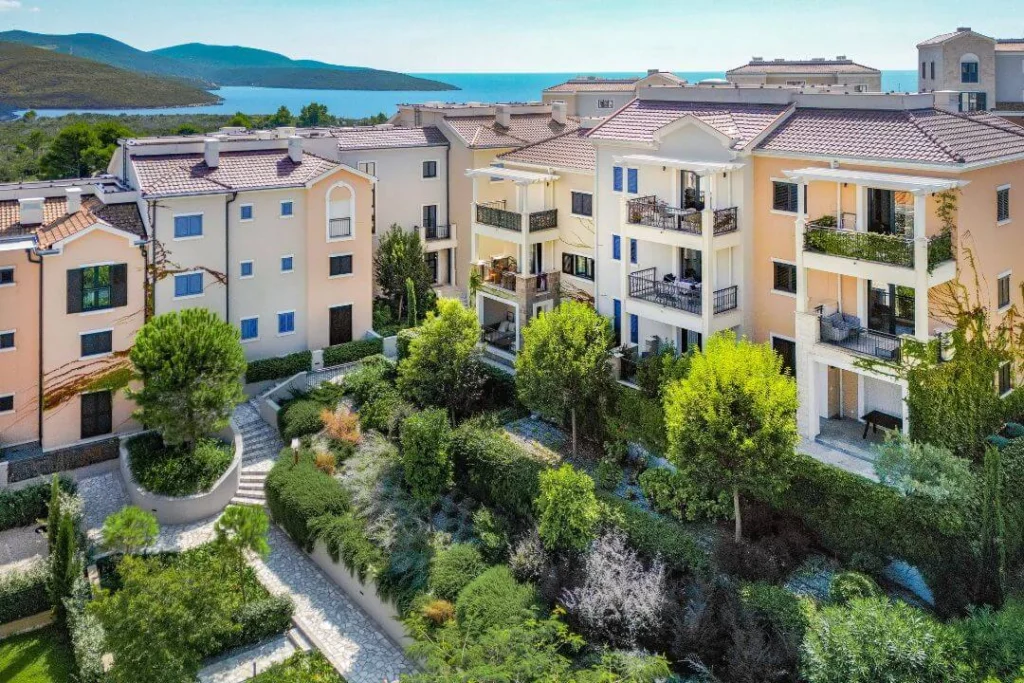
Smaller communities and familiar social networks contribute to a strong sense of local stability. Coastal towns such as Kotor, Tivat and Budva are widely considered safe for residents and long-stay visitors.
Normal precautions apply as they would in any country — be aware of your surroundings, secure valuables and take care on mountain roads, where driving conditions can be challenging year-round.
For the latest travel advice, UK residents should consult the FCDO and US residents should check the US State Department travel advisories.
14. Who Is Montenegro Best Suited For?
Montenegro may appeal particularly to:
- Retirees seeking coastal living in a smaller, quieter setting
- Second-home owners planning extended seasonal or year-round stays
- Remote workers and digital nomads seeking a lower cost of living with European access
- Families prioritising sea, nature and outdoor lifestyle over urban infrastructure
- nvestors looking for property in a growing market below the prices of established Mediterranean destinations
It may not suit those seeking major metropolitan infrastructure, extensive public transport networks or highly centralised public services.
Spending time in Montenegro during both peak summer and quieter winter months before committing to a long-term move will give a clearer picture of everyday conditions.
15. Frequently Asked Questions
⚠ Note: Answers are provided for general guidance. Legal and financial details should be verified with a qualified professional.
Can British citizens live in Montenegro?
British citizens may stay visa-free for limited periods. Longer stays require temporary residence under an appropriate legal basis, such as property ownership, employment or company formation.
Can US citizens obtain residency in Montenegro?
Yes. US citizens may apply for temporary residence under recognised legal grounds, including property ownership, employment or company formation, subject to meeting statutory requirements.
Do I need to buy property to live in Montenegro?
No. Property ownership is one possible basis for temporary residence, but it is not the only route. See our guide to buying property in Montenegro for further detail.
What is the minimum property value for residency in 2026?
For non-EU citizens applying on the basis of property ownership, the municipal tax base must be at least EUR 150,000 under the amended Law on Foreigners adopted on 31 December 2025.
Is Montenegro in the European Union?
No. Montenegro is an official EU candidate country engaged in accession negotiations. Despite this, the euro is used as the official currency, which simplifies financial matters for both UK and US residents.
Is Montenegro a good place to retire?
Many retirees consider Montenegro for its climate, coastal lifestyle and lower cost of living. Full details are in our guide to retirement in Montenegro.
How much does it cost to live in Montenegro?
A single person living modestly outside prime coastal areas can manage on EUR 1,200–1,600 per month. Couples or those in premium locations should budget EUR 2,000–3,000. See the Cost of Living section above for a full breakdown.
Is Montenegro safe for expats?
Yes. Montenegro has low levels of violent crime. Coastal towns popular with expats — Kotor, Tivat, Budva — are widely considered safe. Normal precautions apply as in any country.
Can I move to Montenegro without buying property?
Yes. Property ownership is one route to residency, not a requirement. You can also qualify through employment, company formation, family reunification or retirement status.
16. Final Thoughts on Moving to Montenegro
Living in Montenegro in 2026 is a realistic prospect for retirees, second-home buyers and remote workers who are willing to plan carefully. The country offers coastline, a Mediterranean climate, euro-based finances and updated immigration regulations that now set clearer thresholds for property-based residence.
It is not a decision to make on impulse. Understanding the legal landscape, researching the right location for your lifestyle, and spending time in Montenegro across different seasons will all contribute to a well-grounded decision.
For those seeking a European coastal environment at a scale and price point that larger Mediterranean markets can no longer offer, Montenegro represents a genuinely considered option – and one that is becoming better known among international buyers with each passing year.Lustica Bay on the Lustica Peninsula offers an integrated community with properties available to rent or purchase, year-round amenities, and direct access to five Adriatic beaches, two marinas and an 18-hole golf course. With 600+ residents already living here, it is Montenegro’s most established coastal community for international buyers. Visit lusticabay.com to explore current availability.