


Perast holds one of Boka Bay’s most enduring stories: a Baroque town shaped by seafaring families, two symbolic islands, living rituals and a relationship with the sea that still defines its rhythm.
CONTENTS
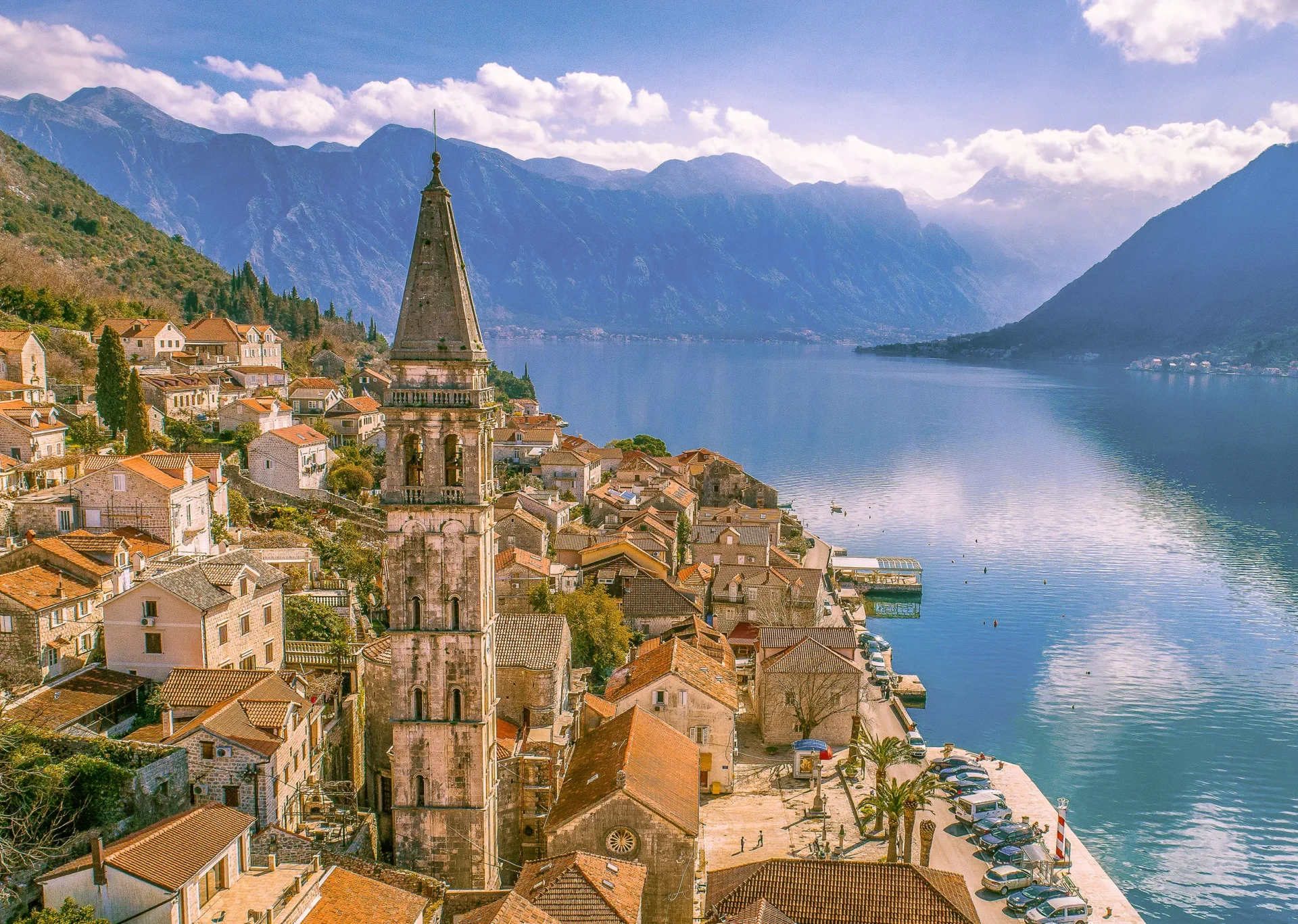
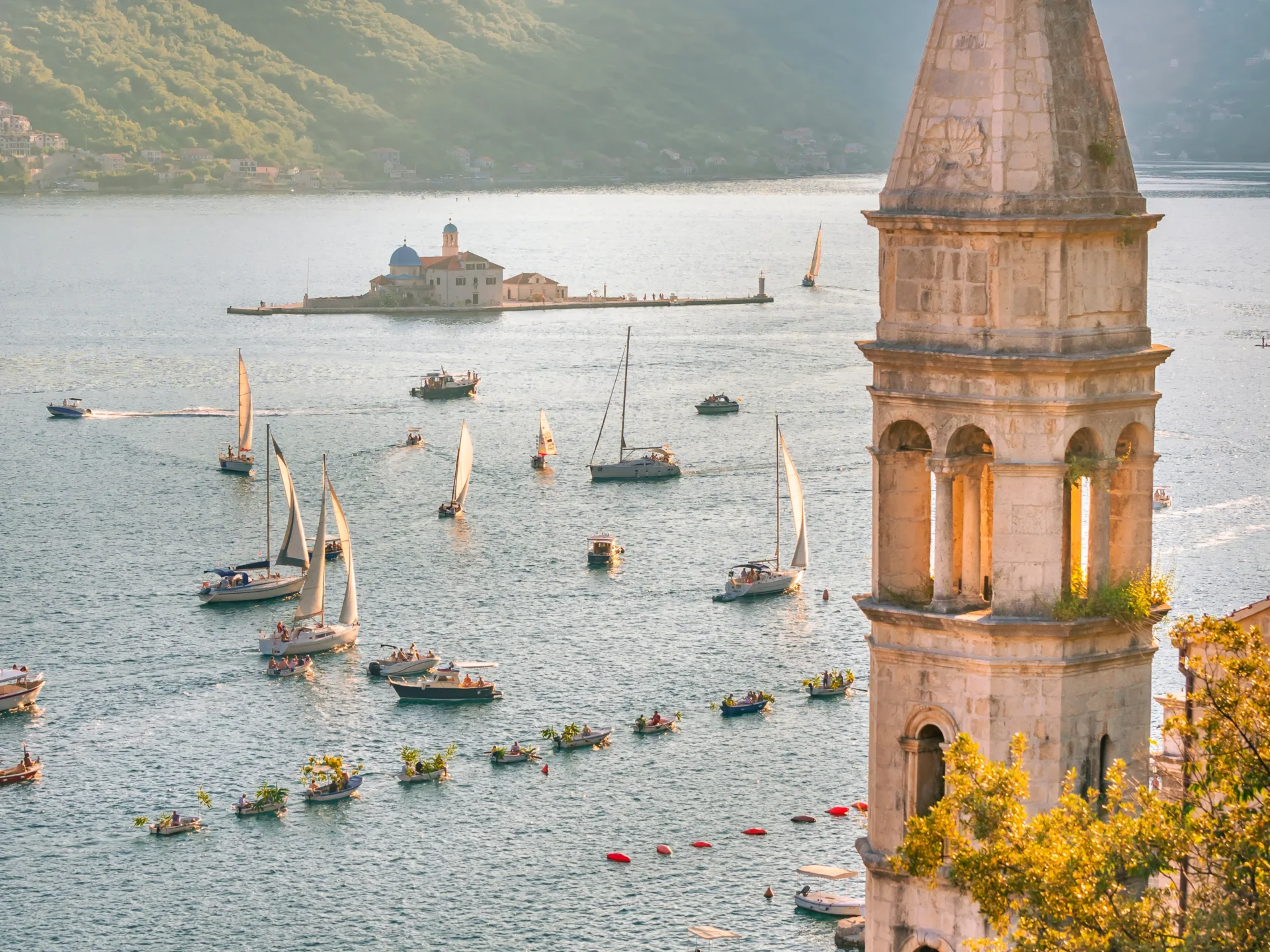
Perast glows in the early morning
Dawn light slides patiently across the façades of Baroque palaces, turning the stone ivory then honey-gold. Wooden boats rock against old pontoons as church bells travel across the water, their vibrations absorbed by the mountains surrounding the Bay of Kotor. The maestral wind slips through the Verige Strait.
Beyond the town’s waterfront, two islets emerge from the water as twin guardians of Perast’s past. One is bright, open to light and people. The other is dark, wrapped in cypress trees and quietude. These are Our Lady of the Rocks and Saint George respectively, and, together, they have shaped the memory and identity of Perast.
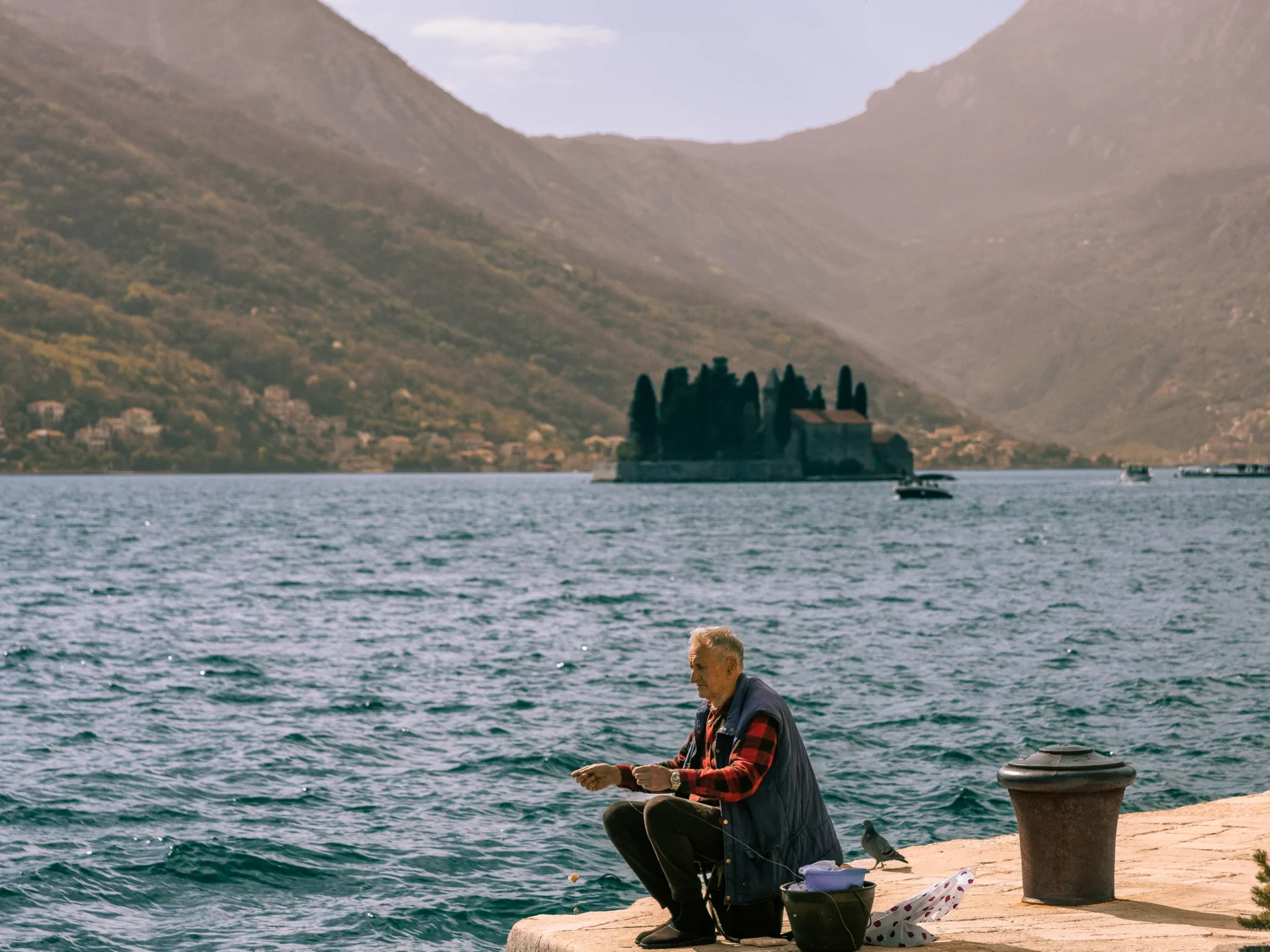
“Perast is most itself in the early morning and late evening,” says Andro Radulović, vice-admiral of the Bokelj Navy, former director of the Perast Town Museum, and descendant of one of the town’s old seafaring families. “That is when you hear only the gulls, see the fishermen leaving, and feel how deeply the spirit of this place has remained.”
Andro’s family home has stood here since 1623, the same year the bell tower of Saint Nicholas was completed. The house’s first floor still holds Boka’s last authentic Baroque interior: ceilings are painted in the manner of Dalmatian masters, portraits of ancestors hang high, a library is full of Italian and French books, and stone staircases are worn smooth by the passage of time. Everything speaks of an epoch when Perast flourished as the Adriatic’s great maritime town.
During the Venetian era (1420-1797), more than one hundred ships sailed under Perast captains. Wealth arrived through Mediterranean trade routes and settled into the town’s limestone palaces: Murano glass, Florentine mirrors and porcelain brought home from distant ports.
Saint George
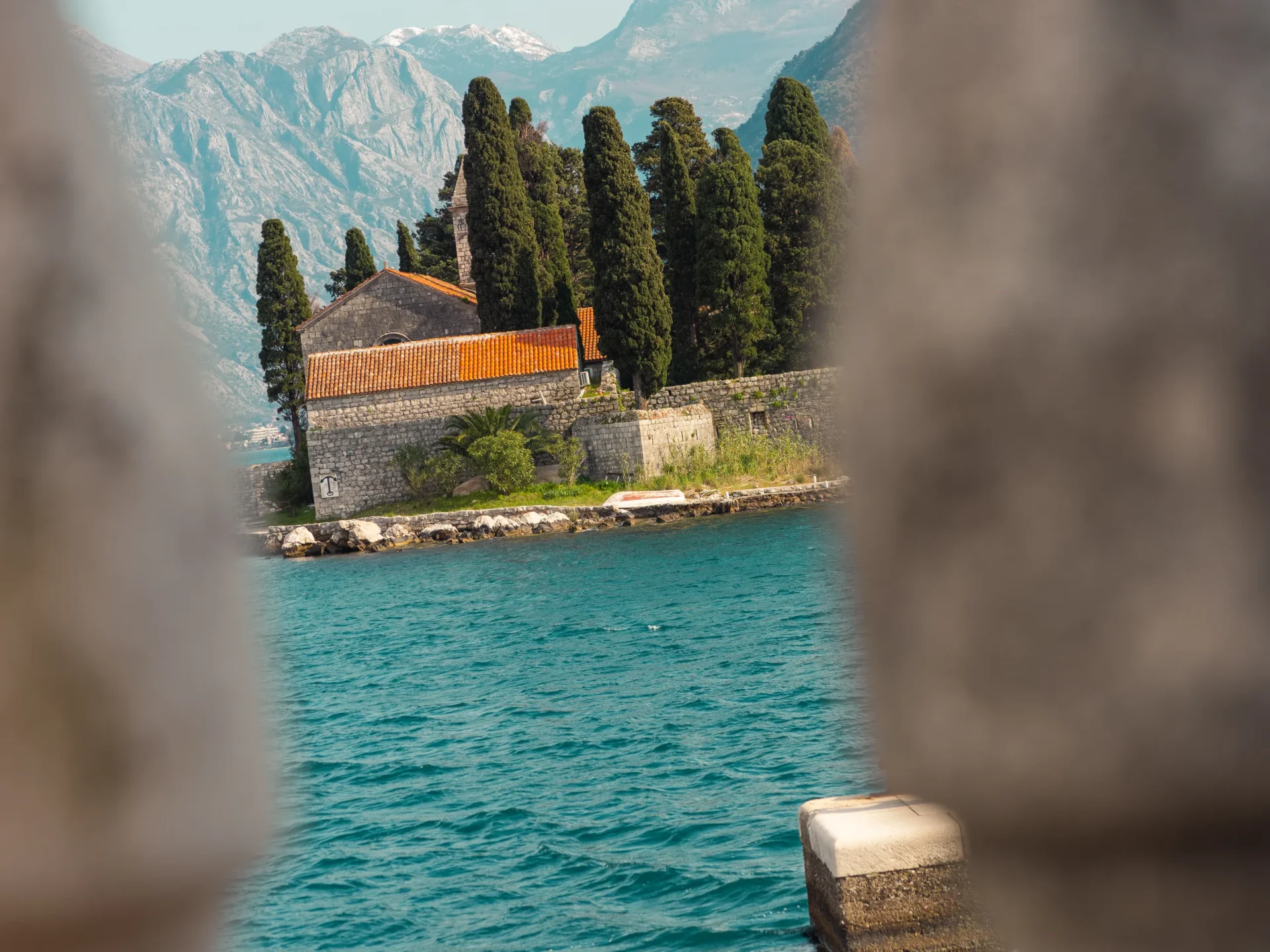
A natural island shaded by tall cypress trees and enclosed by old stone walls. Home to a Benedictine abbey dating back to the twelfth century, the island endured Ottoman attacks and earthquake damage before taking on its present appearance. Closed to visitors today, Saint George became the burial place of many of Perast’s most prominent captains and noble families, earning the nickname ‘The Island of the Dead Captains’. Its haunting atmosphere is even believed to have inspired Arnold Böcklin’s famous painting ‘Isle of the Dead’.
Perast’s Romeo and Juliet
During the Napoleonic occupation of the coast in 1813, a young French soldier and sailor named Ante Slović fell deeply in love with Katica Kalfić, a girl from Perast. Their romance blossomed despite the backdrop of occupation and cultural tension. However, tragedy struck when the sailor received orders to bombard the coastline, leading to the heartbreaking moment when he found his beloved’s lifeless body among the wreckage. In mourning, he took her body by boat to Saint George and buried her beside the monastery, forever binding the island to one of Perast’s most enduring love stories.
Our Lady of the Rocks
Yet for all that outward-facing prestige, every story in Perast returns to Our Lady of the Rocks.
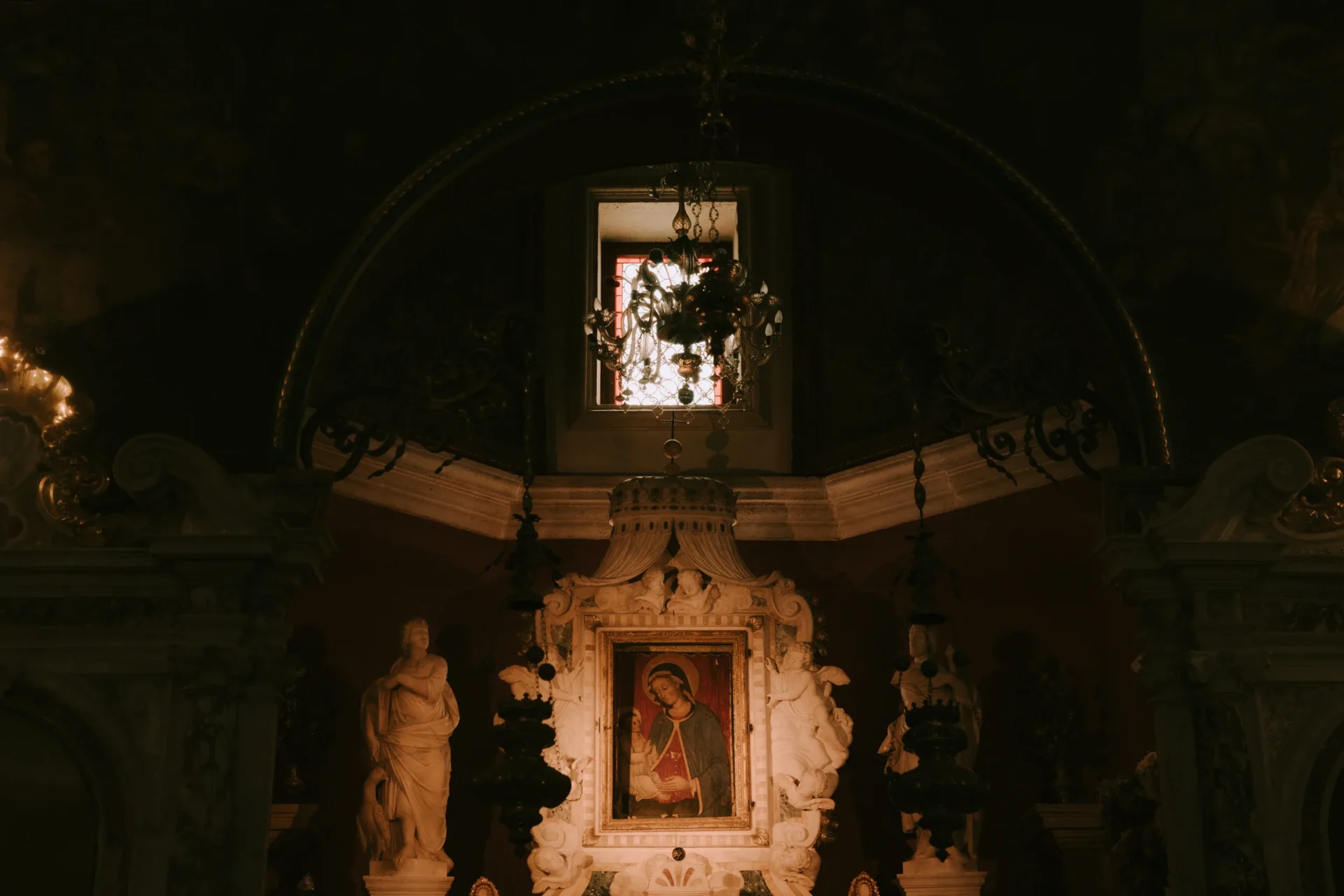
According to local legend, in 1452 fishermen discovered an icon of the Virgin and Child upon a reef in the bay. They carried it home, only for it to reappear on the same rock the following morning. One of the fishermen, gravely ill at the time, soon recovered after praying before it, leading the people of Perast to believe the reef had been touched by something sacred.
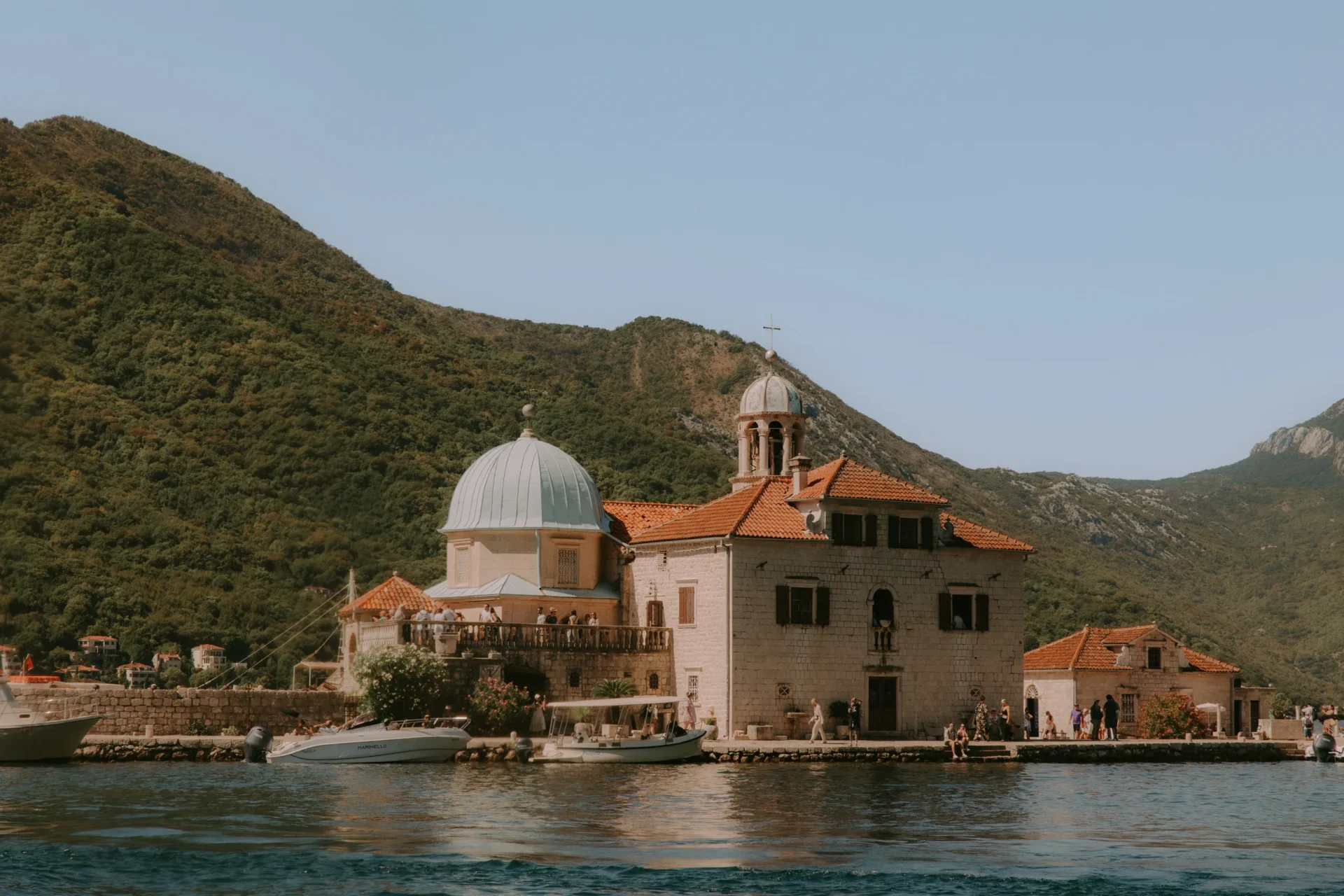
Families began widening the reef by throwing stones into the sea and sinking old ships around its foundations. Across generations, an island emerged from the bay. Upon it rose the church that still watches over Perast today, blue-domed and luminous against the mountains. Even now, the island continues to grow.
At sunset on 22 July, the annual Fašinada begins. Boats from Perast and across the Bay of Kotor sail towards Our Lady of the Rocks in a procession drawn from another age. Decorated with green branches, wooden boats are tied together, one beside the other, and filled with stones that will be thrown into the sea around the island.
“Everything is precisely known,” says Andro, “which boat goes where, who sits in the first boat, who sings. It is not a performance – it is the continuation of life in this place.”
In the leading boat sit the parish priest and respected citizens of Perast. Behind them come the singers, followed by boats from Morinj, Risan, Prčanj, Muo and Stoliv. This is a tradition that people return home for. To row beside loved ones, hear familiar songs across the water, and reconnect with the ceremonies that made them.
If Our Lady of the Rocks is all about light and ritual, the opposing island of Saint George rests in shadow and silence. It represents another mood entirely – more reflective and full of tales that still get passed from mother to daughter, father to son, including Perast’s own Romeo and Juliet legend. Tall evergreens surround its old Benedictine monastery and cemetery where many of Perast’s noble families were buried.
“When you close the gate of Saint George, you hear nothing anymore. Only the trees and birds remain,” says Andro.
Together, these two islands are symbolic of Perast itself. One sustains devotion and continuity, the other silence and remembrance. Both belong to the sea and her people.
A few minutes by boat from Perast lies the Adriatic’s only man-made island. Built gradually over centuries by local families throwing stones around a reef, Our Lady of the Rocks remains the spiritual heart of the bay. Inside the seventeenth-century church are Baroque frescoes, silver votive plaques left by sailors, and embroidery created by the women of Perast while waiting for loved ones to return from sea. The most famous belongs to Jacinta Kunić who spent years stitching in the hope of her husband’s return. According to legend, strands of her own hair were woven into the embroidery: black in youth, grey by old age.
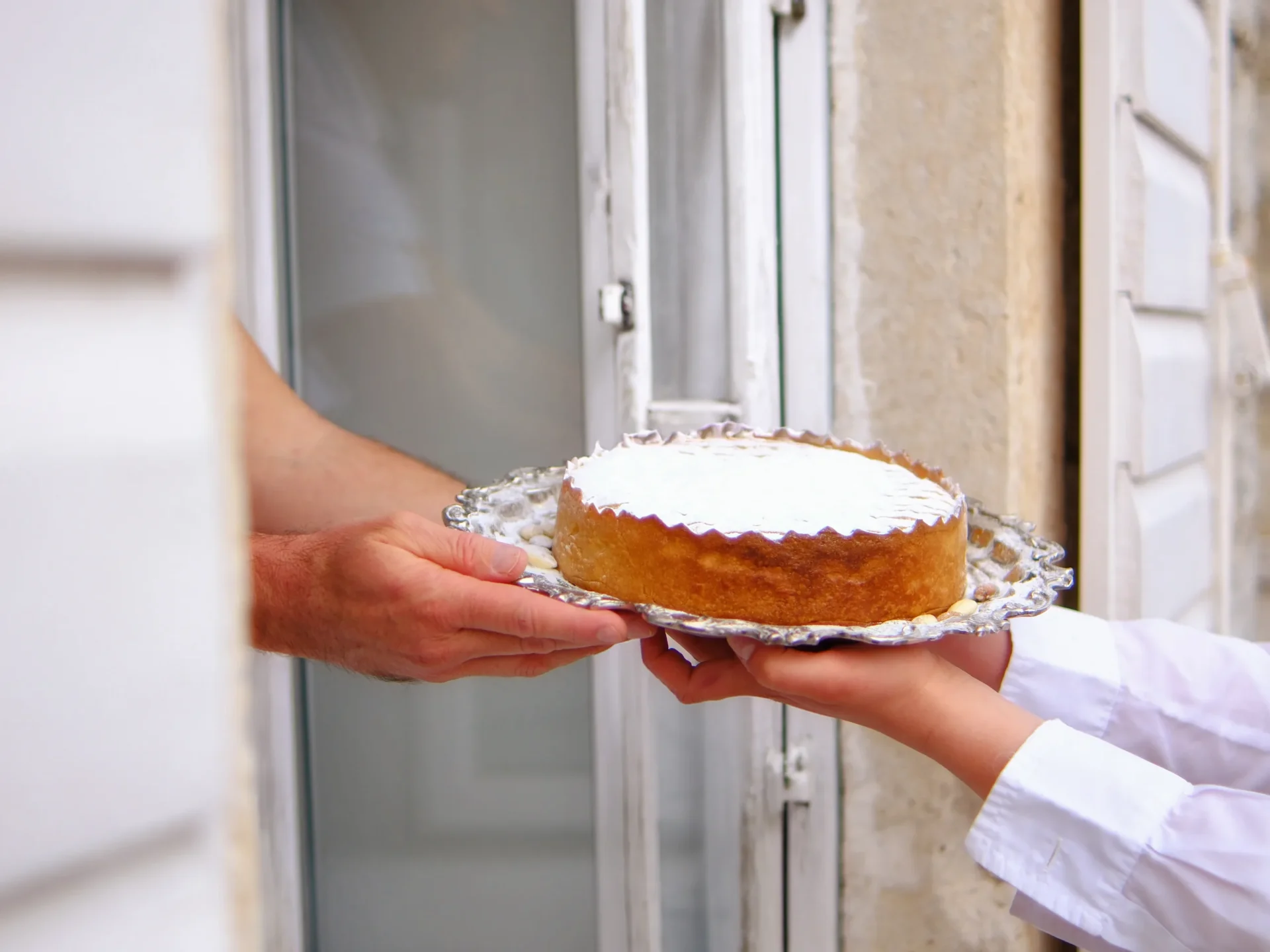
Boats, kitchens and Perast Cake
This relationship with the water continues far beyond Perast’s old town. In nearby Lepetane, Nikola and Jelena Serventi still maintain one of Boka’s traditional wooden boats by hand. Named Opet Ništa – Nothing Again – the vessel has been in the family for generations, formerly used for fishing by candlelight.
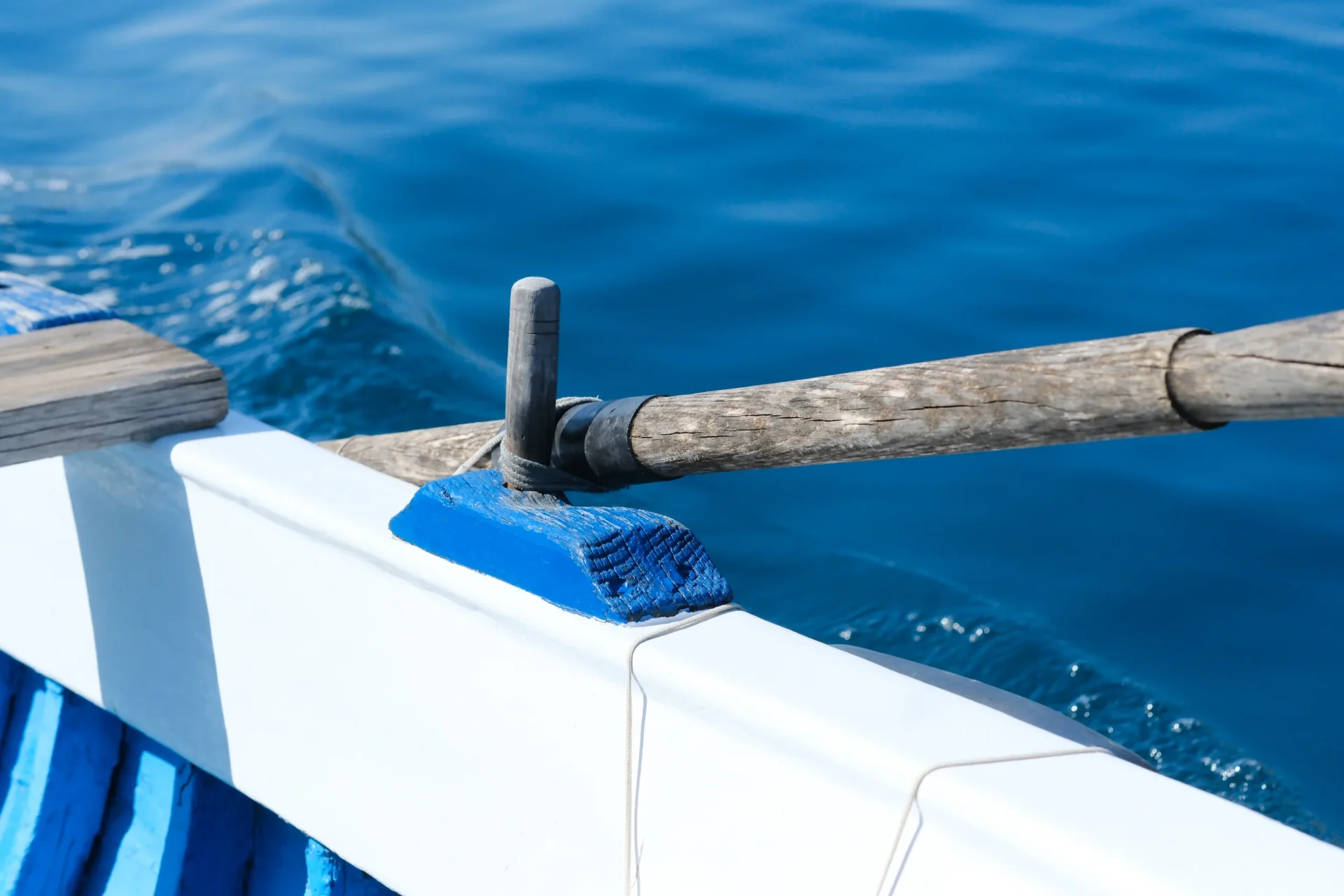
Nikola remembers his father once refusing work in Split because it would have meant leaving the family boat too far from home. “He chose Boka instead,” Nikola says. “The boat is still tied outside our house.”
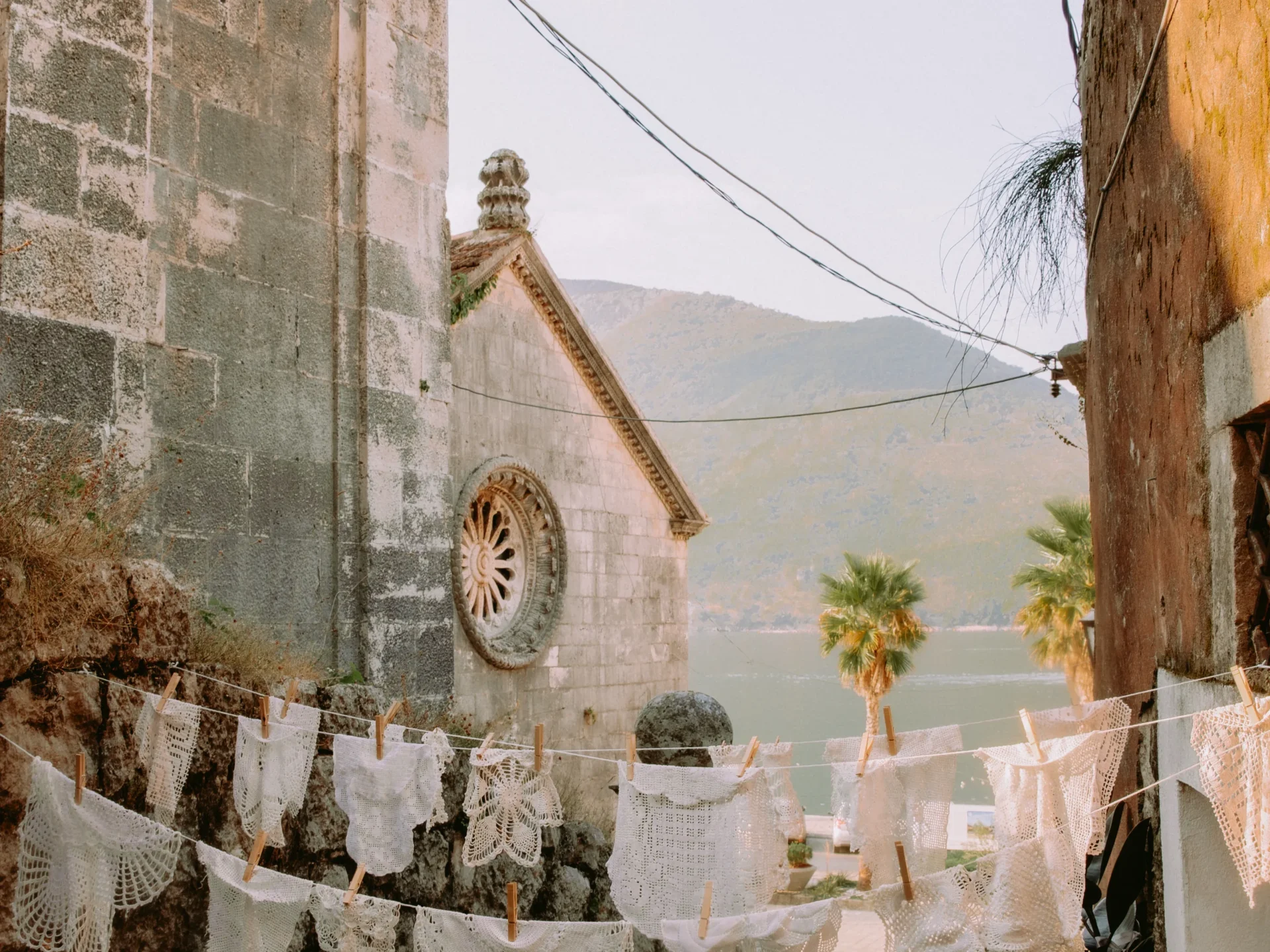
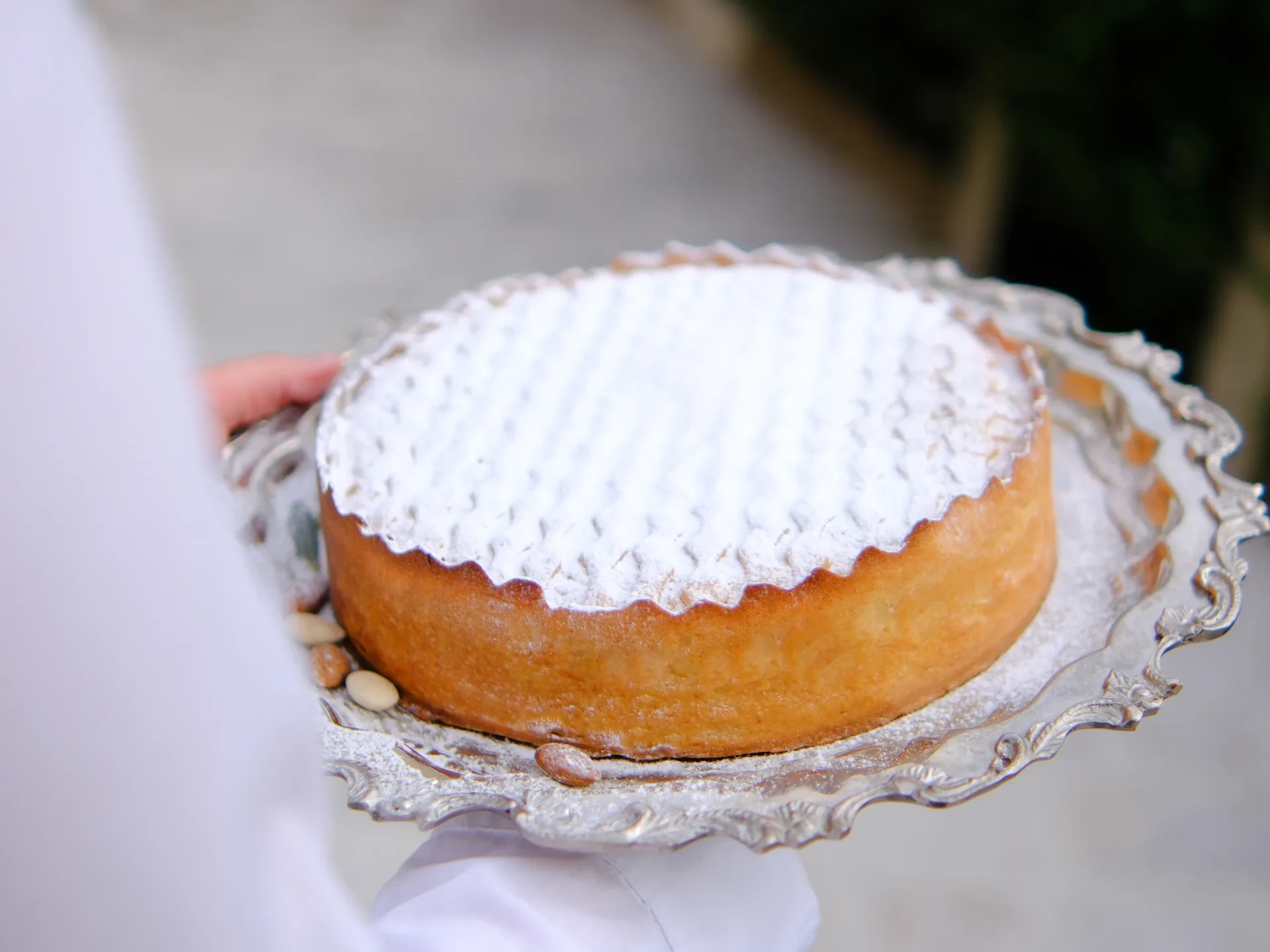
That attachment to the sea guided every aspect of Perast life. Men spent months sailing across the Mediterranean while women remained ashore, diligently looking after homes, children, recipes and faith. Their influence still survives in the town’s kitchens, particularly in Perast Cake – the rich almond dessert once prepared for sailors embarking on long voyages. Made with almonds, eggs, lemon and maraschino, it transported the flavour of Perast across distant seas, which returns us to Nikola.
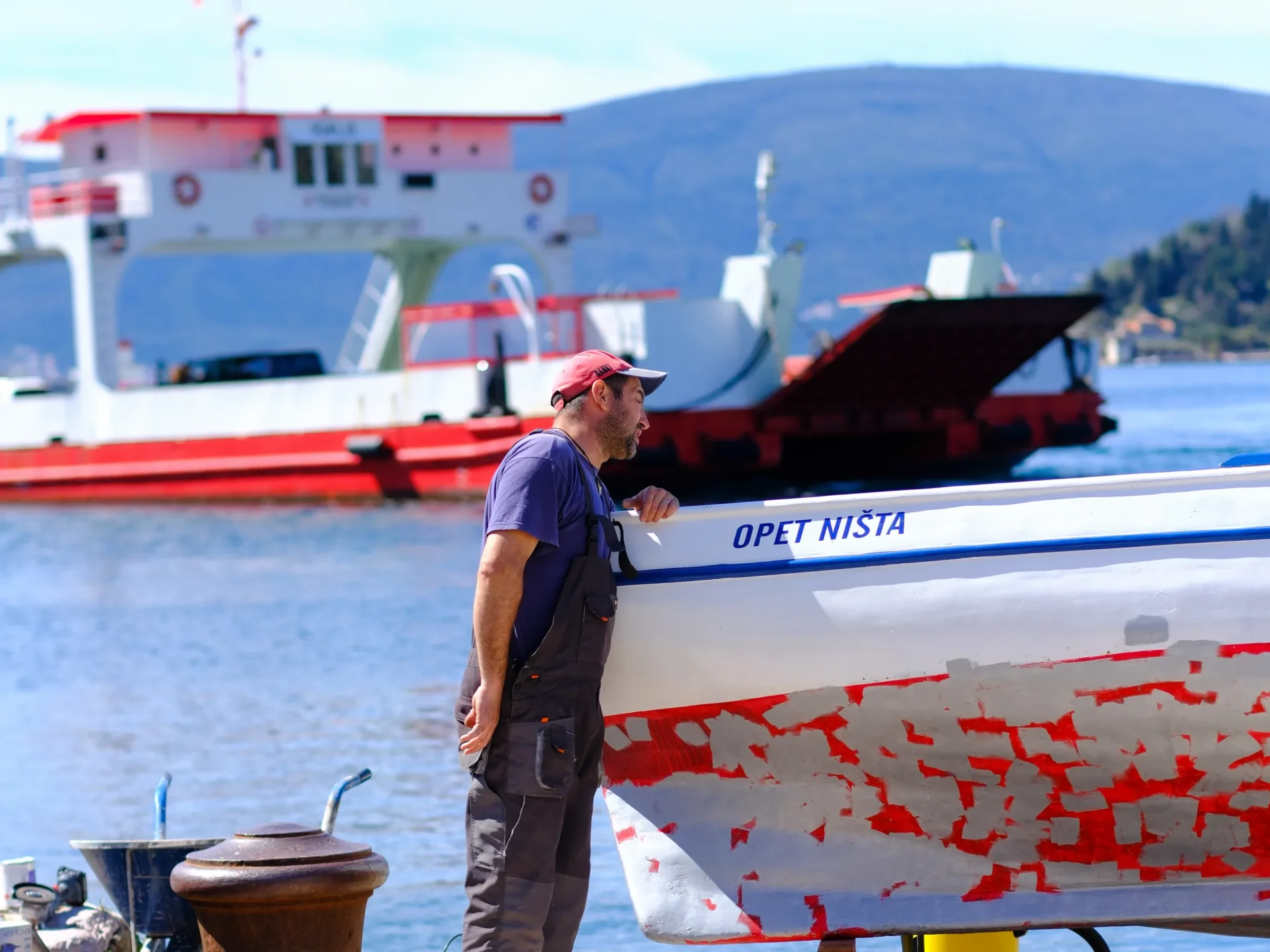
“Boka, boats and the sea once meant fjaka,” he says, using the Dalmatian word for a peaceful, unhurried pace of life. “Today, even the sea has become hurried.” Wooden boats are slowly making way for plastic hulls and powerful engines. Boatbuilders are fading, so too are the old ways. Nikola’s family holds out, with hope and care: “Our children learned to step into a boat before they learned to swim, just as children in Boka once did many moons ago. As long as the next generation is taught to respect tradition, Perast’s story, its true way of life, will never disappear.”
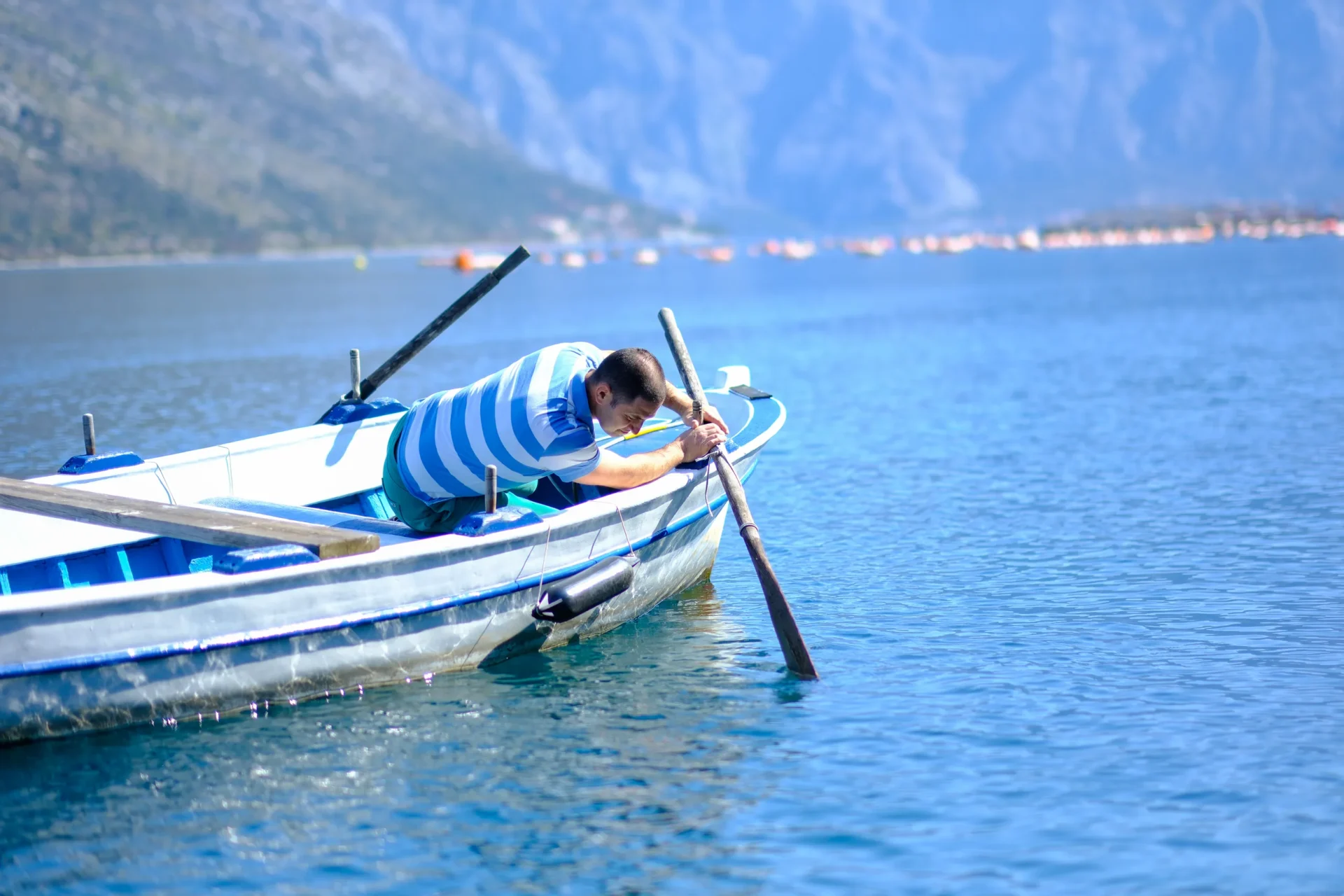
This is why Perast is different from anywhere else on the Adriatic. History is everywhere in its open-air museum. It’s visible in the boats tied outside homes, in the songs shared during Fašinada, and in recipes gratefully inherited. Life moves alongside memory rather than away from it and, somewhere between Our Lady of the Rocks and Saint George, the town never forgets who it was and who it wants to be.
All of which makes Perast Boka’s last great Baroque dream. A preservation of what is most beautiful. And what is most human.
Perast Cake (Peraška Torta)
Ingredients
- Dough: 8 egg yolks; 200 grams sugar; 250 grams butter; a small cup of white wine; grated peel of one lemon; 1 packet of vanilla sugar; about 750 grams of flour.
- Filling: 8 egg whites, beaten into stiff peaks; juice of one lemon; 400 grams sugar; 1 tablespoon crushed biscuits or fine breadcrumbs; 500 grams coarsely ground almonds; 1.5 dl sour cherry liqueur (Maraschino).
Method
- Prepare the dough: combine the egg yolks, 200 grams of sugar, butter, white wine, grated lemon peel, vanilla sugar, and about 750 grams of flour. Mix until a smooth dough forms and leave to rest in the refrigerator for 15-20 minutes.
- Prepare the filling: beat the egg whites into stiff peaks. In a separate, large bowl, combine the lemon juice, 400 grams of sugar, the crushed biscuits or breadcrumbs, ground almonds and sour cherry liqueur. Fold the beaten egg whites into the mixture and gently combine until well incorporated.
- Assemble the tart: line a 28cm cake mould with baking parchment. Roll out the prepared dough, cut a circle for the base and wide strips for the sides, leaving a little aside to make narrow strips for the topping. Line the cake mould with the pastry. Add the filling then top with a lattice pattern made with the narrow strips of pastry.
- Bake: preheat the oven to 180°C, or adjust according to your oven’s power. Bake for approximately 45-50 minutes.
- Final touches: while the Peraška Torta is still warm, add pieces of butter on top and sprinkle with sour cherry liqueur. Allow to cool down completely before removing from the mould. Dust the finished Peraška Torta with powdered sugar.
Originating in the homes of seafaring families as a dessert capable of lasting long voyages, Perast Cake is rich with almonds, eggs and maraschino liqueur. It was both a luxury and practical nourishment for sailors spending months at sea.
Where to try Perast Cake
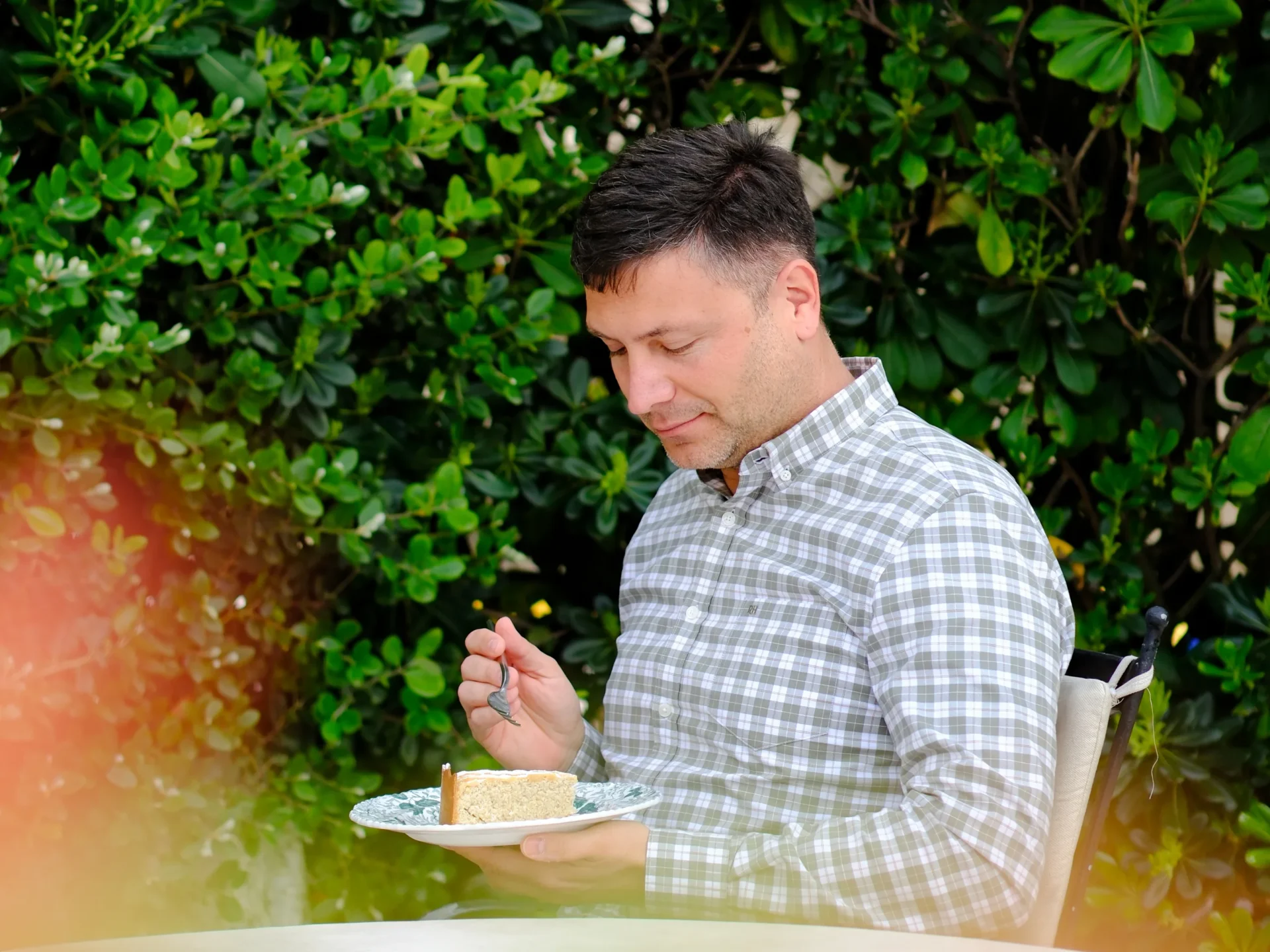
Đardin remains one of Perast’s most atmospheric waterfront restaurants and wine cellars. Set within the seventeenth-century Brajković-Radulović Palace, Perast Cake is still prepared traditionally here, served beside views towards Our Lady of the Rocks and Saint George. Arrive towards sunset, order a slice with local wine or herbal liqueur, and watch the bay soften into evening light.