In Boka Bay, fishing is more than work: it is family inheritance, night-time ritual, endurance, memory and a way of belonging to the sea.
CONTENTS
In the Bay of Kotor, there is the sea before dawn – a cold, steel-grey reality where the Lakićević family hauls a seven-century legacy from the deep – and there is the sea after dark – a silent, amber-hued solitude where Nebojša Delac navigates a ‘blue field’ of memory and ritual. Times may have changed, but at both hours certain traditions remain, binding the families to a history that refuses to wash away.
Inheriting the sea – Life as a Lakićević
In the cold light before dawn, the waters surrounding Bijelila are as still as a held breath. One lone boat bobbles on its glass-flat surface, carrying four figures. A grandfather, a father, a brother and a child, different chapters of the same Lakićević family story.
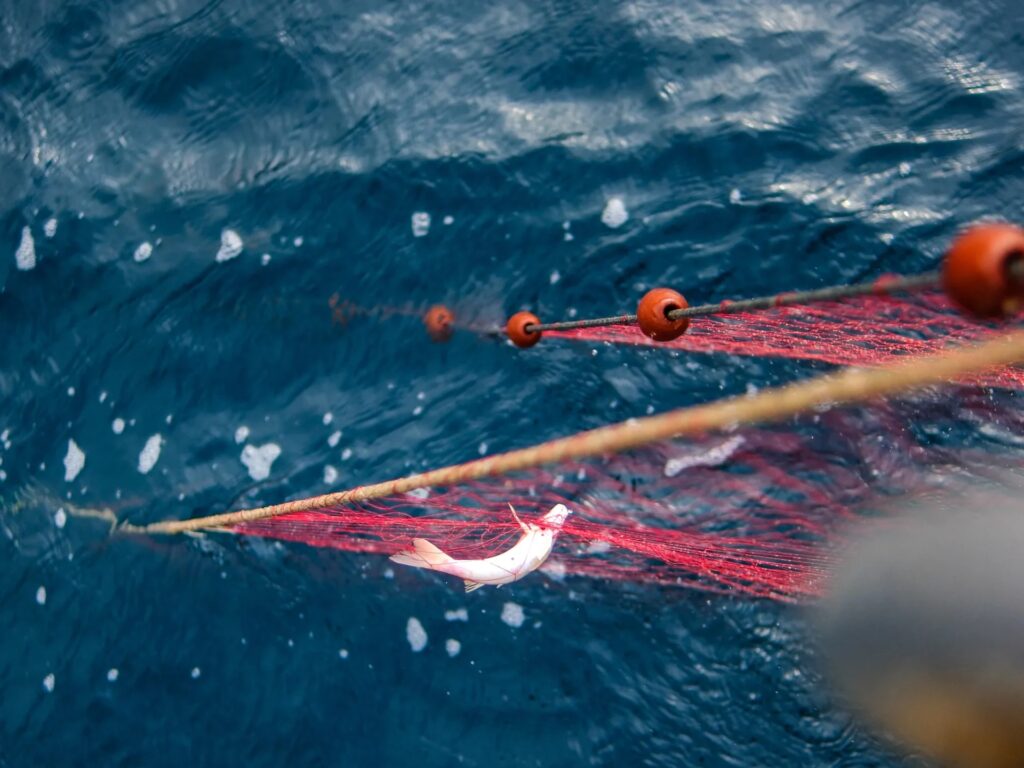
There is no sound except the slap of water against the hull and the wet friction of nylon as nets rise from the dark. The men’s movements are instinctive, remembered in the muscle. A choreography of the lean, the grip, and the steady haul that has been refined by every generation that came before. Right here, right now, this boat is the family’s entire world.
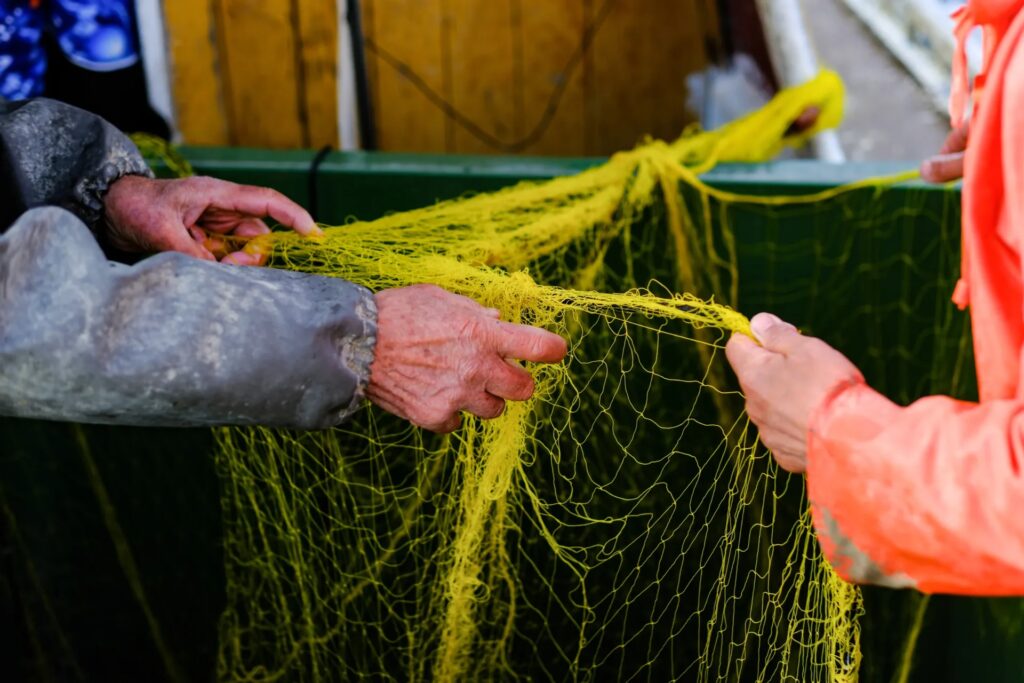
“You are born into this,” says Davor, the aforementioned father, his hands steady on the net, eyes fixed on the horizon. “It is not a job you choose but a life given to you, perhaps even imposed in a way. From a very young age, you live by the sea, you watch it, you listen to your elders. It gets under your skin. After that, there is no turning back. You bind yourself to it, and to your descendants.”
Bijelila, a stone-stitched village on the Luštica Peninsula, has been the Lakićević home for seven centuries. While the world beyond these shores accelerates, life here is guided by the tides. Davor – alongside his brothers Slavko, Dragan and Jovan, and their sister Anita – continues a lineage of fishing as demanding as it is cherished.
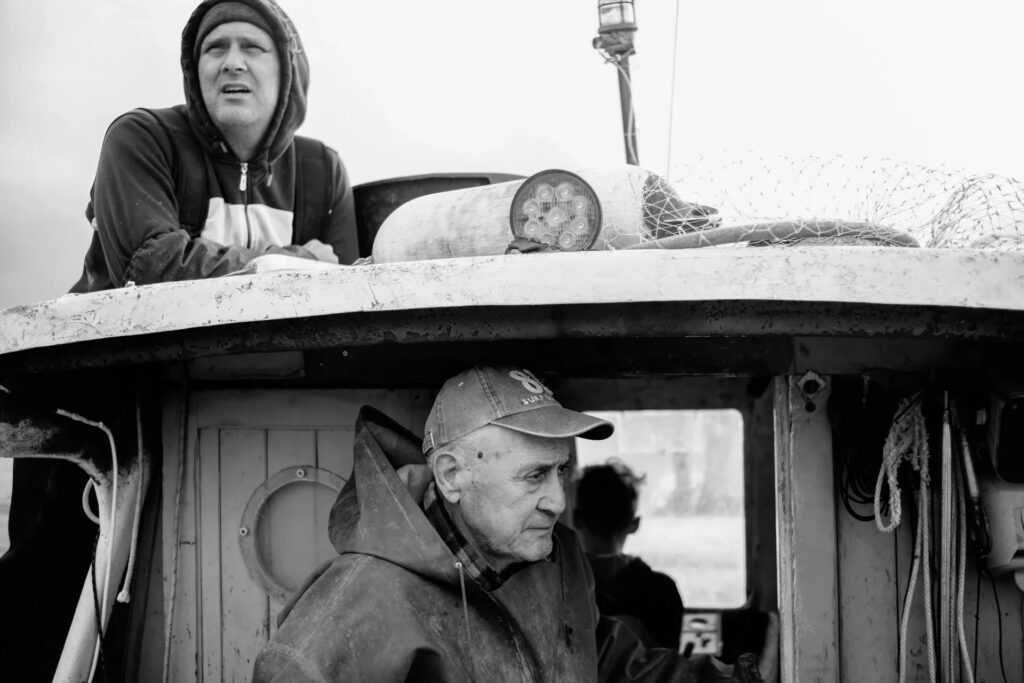
On the boat, Dragan pulls the line taut, his face a counterpoint to his brother’s enthusiasm. “I see more of the sea’s practical side. It is not always easy, but it has a particular strength. At sea, trust is the only currency and there is no room for mistakes. Work and brotherhood must become one.”
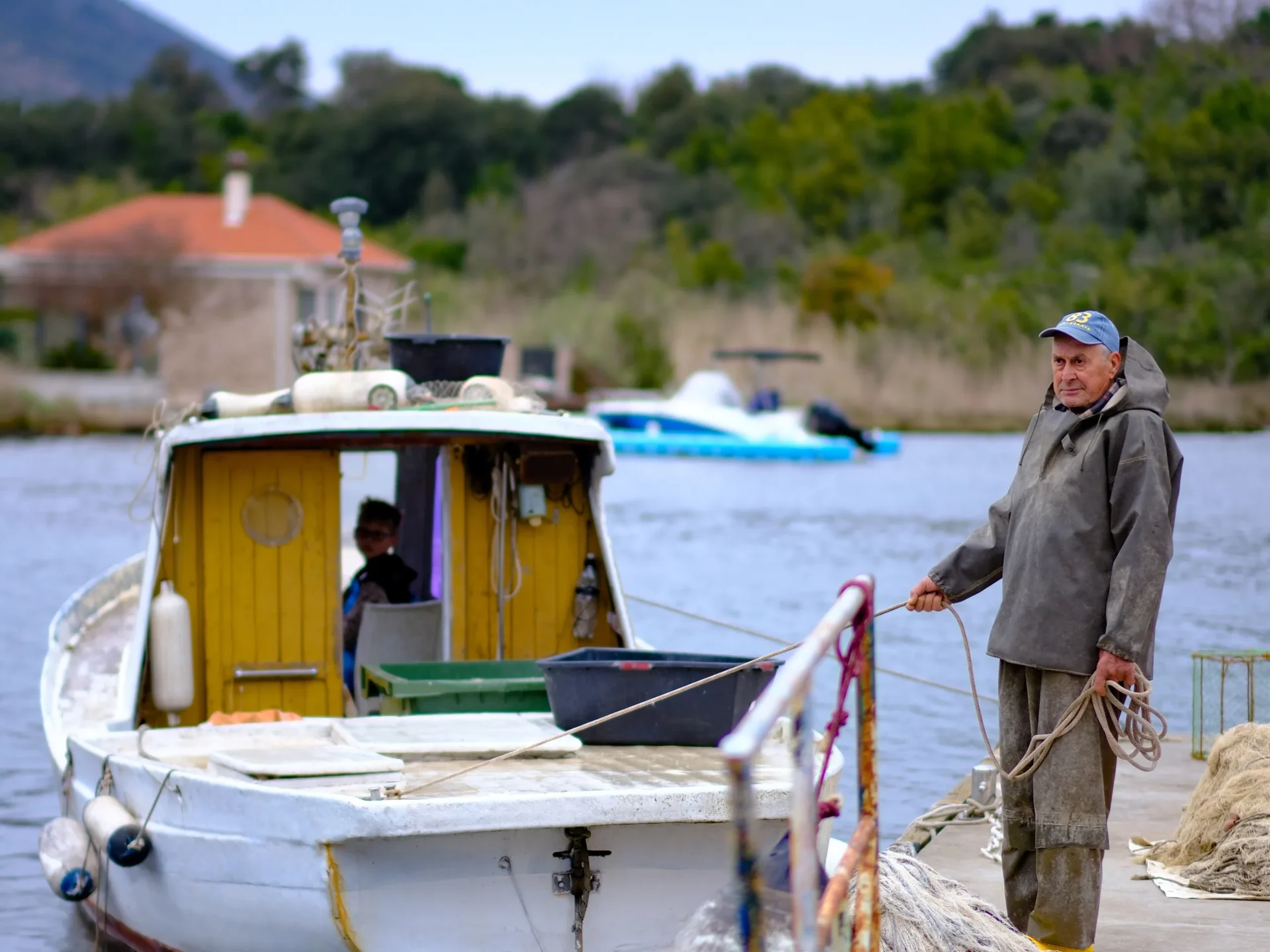
Mihajlo, the boat’s grandfather, watches his sons Davor and Dragan with the authority of experience. “The sea is useful but dangerous,” he tells them. “You must never go against it, but work with it. You learn to recognise the signs of bad weather because that is what saves your life.”
The Adriatic is the ultimate authority, respected but never trusted. The family carries the memory of storms with more reverence than their largest catches. They recall 2016, when they brought in 1,600 kg of amberjack in a single day, and the 70 kg swordfish of 2025, but the days the sea challenged them have created a deep humility.
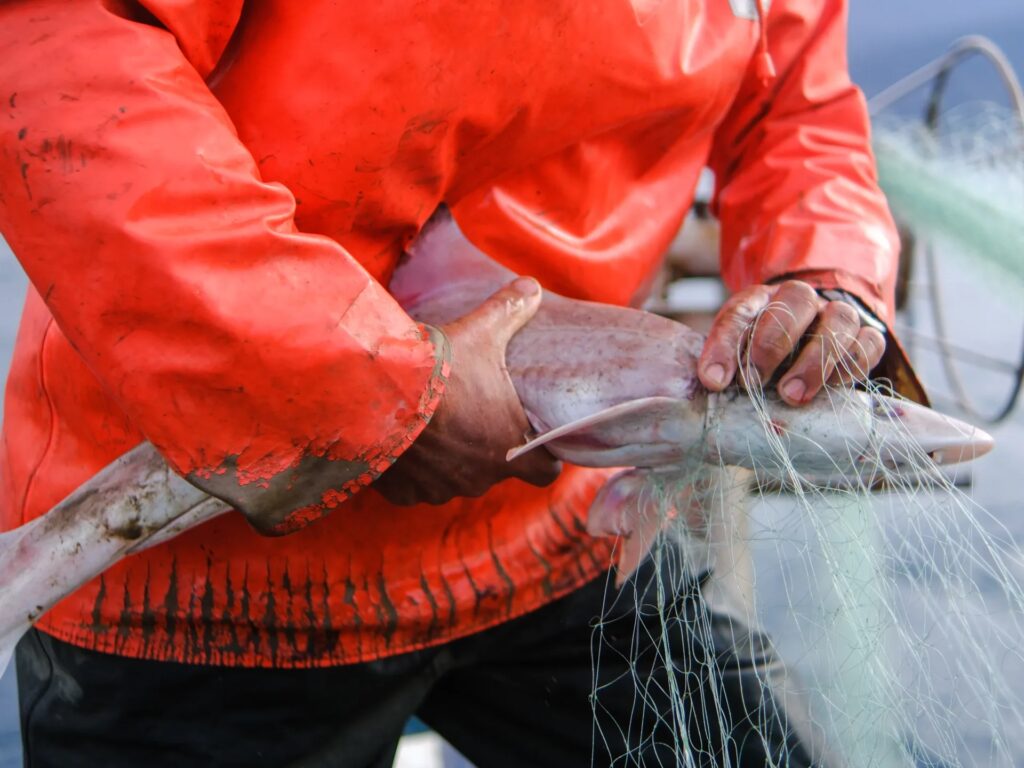
Mihajlo’s attention switches to 1998 and a night that remains the greatest fishing loss the Bay of Kotor has seen. He turns to the boat’s child – his grandson, Davor’s son – Mihajlo ‘junior’.
“We were fishing a few kilometres from our home and there was an unusually large amount of fish under the feral, the strong light that attracts them. Encouraged by what we saw beneath the boat, we ignored the risk. The storm was faster than our thoughts. Suddenly, a powerful cyclone struck, first overturning the smaller boat with the net we were towing, and then sinking the main vessel. Your Uncle Dragan and I jumped into the sea and fought the waves for over two hours while family and friends searched for us. The storm was so strong that even the army was not allowed to set sail.”
Davor glances over to his father and son. “When the storms are strong, you are never afraid for yourself because you don’t even have time for that. Everything happens quickly. In those moments, I only worry about the engine and that a rope or net might get caught in the propeller which would be fatal for us. That night, you lost everything but you survived.”
Back on the stone quay, Anamarija, Davor’s wife, is preparing for the day. The family’s restaurant, Porto Bjelila, waits for the morning’s catch to be brought into its kitchen. A fish plate for two will be prepared, including red and black risotto, gambori, mussels, squid and whatever else can be caught. Guests may just visit for lunch with the Lakićevićs, but many also stay in the family’s apartments or come for the private boat tours to the Blue Cave, Gospa od Škrpjela and Perast.
Having come to the family from Tivat, Anamarija does not romanticise the water, but she understands it as the responsibility that binds them.
“Life through this family has taught me to see the sea differently. Not just as beauty and enjoyment, but as dedication and patience. It is very special to see how everyone works together, even when they do not always agree, which is entirely normal for a big family.”
“Our household moves with the sea, as one, through the fish we catch, the catch we cook, and the guests we welcome to these waters.”
The day is long and full. There is no work/life balance here. It is all just life.
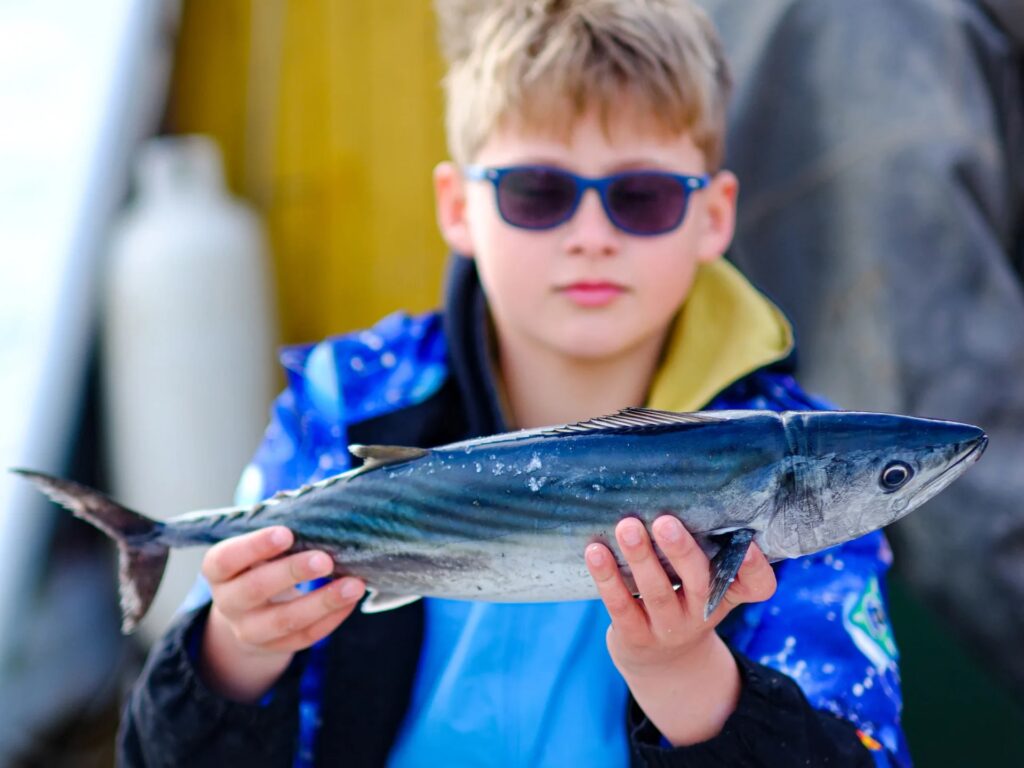
Out on the water, Davor helps his son Mihajlo with the nets. At nine years old, Mihajlo is proof that the family’s story is far from its final chapter. Every day, he wakes without an alarm, fuelled by the anticipatory buzz of being on the boat. He gets dressed straight away, guzzles his Nesquik, and heads quickly to the water.
“I like it when you let me steer the boat,” he says to his father with a prideful belonging as he watches the nets rise, looking for the first flash of silver. To Mihajlo, nothing matters bar the rush of the nets and the salt-sting of freedom. He’s a sturdy soul, carrying the weight of all those who came before him without even knowing it. He is the proof that we linger, that we persist. But he is also a question.
What world will Mihajlo find waiting for him when he takes the helm? The sea will remain, of course, it is eternal. But one wonders if the life of the hands, the salt and the stone will survive. Will the old ways stop being a necessity and start becoming a performance?
These are important questions, but ones which must wait. The sea doesn’t pause for philosophy and today’s work is still to be done. As the boat returns to the quay, the heavy, wet reality of the nets returns.
“The sea has taken the ease out of life, because this is a hard way to earn a living,” Davor muses, watching his son help secure the lines. “But it has given us everything: life, work, love and family. There is no feeling that can replace being at sea and doing what you love, and for that we can only be grateful.”
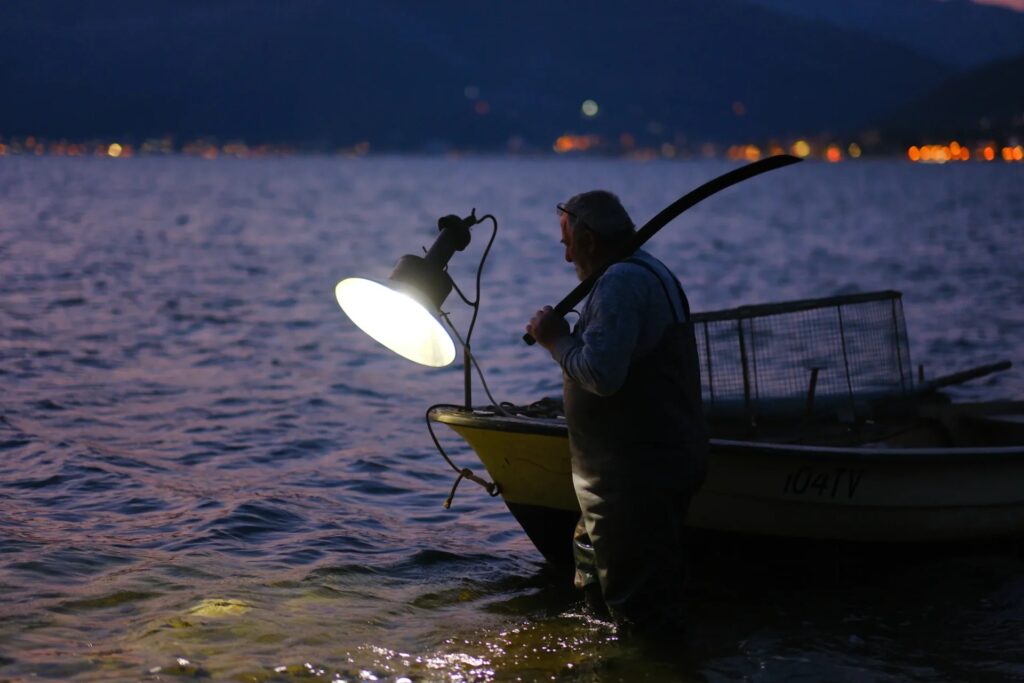
A light in the dark
Fishing by candlelight with Nebojša Delać
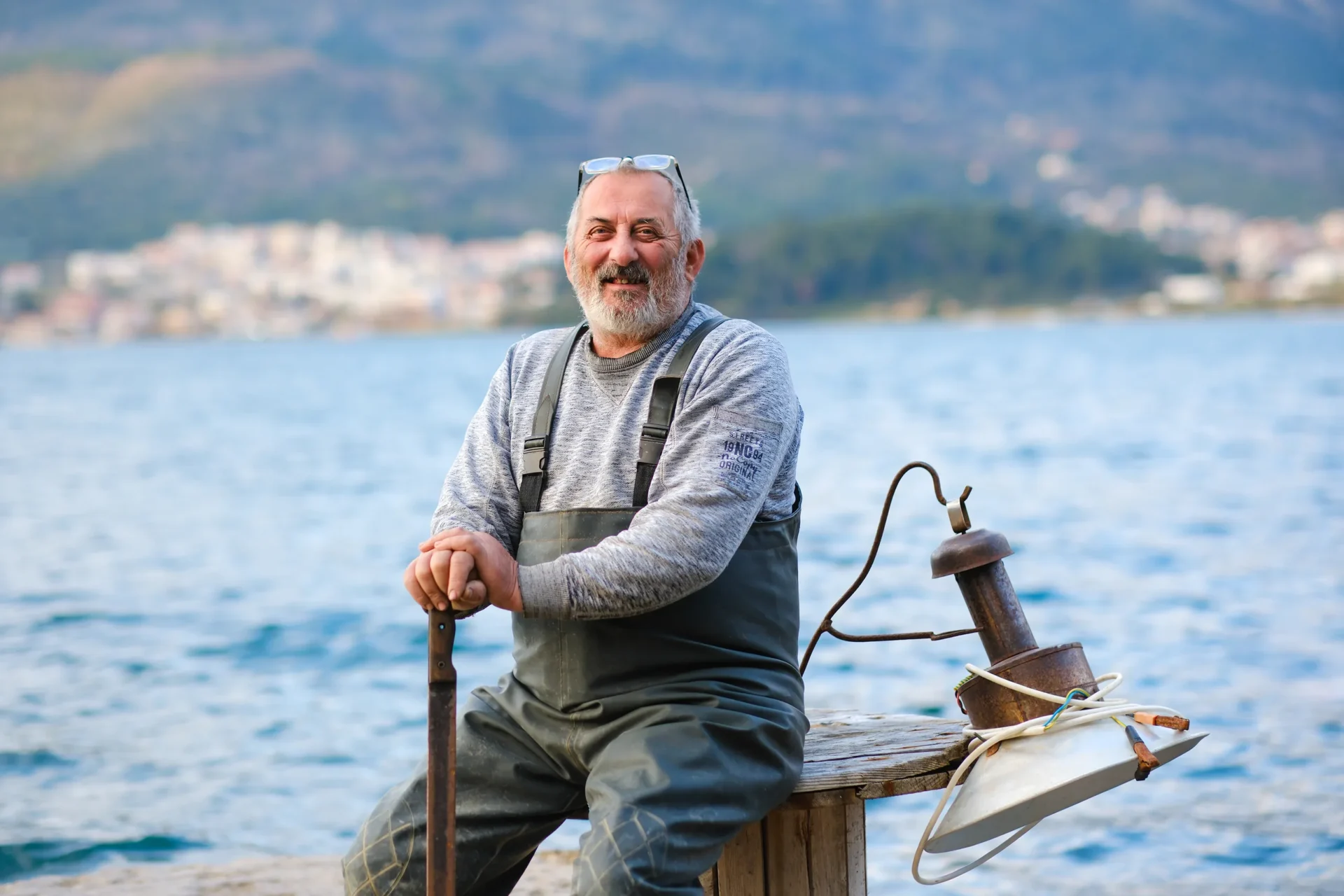
“The sea,” Nebojša says, his voice carrying the grit of the coast, “is like a blue field. An existence that keeps me whole. I cannot live without it.”
In the dead of night, a single, trembling beam of amber lights up the water.
Beyond the circle it creates, the Bay of Kotor does not exist. There is no Tivat, no Island of Flowers, no static from the modern world. There is only the black glass of the water and the silence of the shallows. In the bow of the boat, the feral casts its luminescence downward, piercing the surface to reveal a nocturnal theatre of sand, seagrass, and the sudden glide of a passing pectoral fin.
Balancing over the gunwale, Nebojša Delac moves with the ghost-like economy of a man who has spent a lifetime tending these waters. Slow, steady, no wasted motion. Spear held low, his movement shifts to match the tilt of the tide. Known locally as ribanje pod ukres, this is fishing by candlelight.
For Nebojša, these waters were his first classroom. His education began at the age of six when he started rowing the boat for his father through the ink-black nights of the bay. His father sat in the stern, the master of the light, while the weight of the oars grew heavy in Nebojša’s small hands. It was quite a responsibility for a child. To maintain the pace, to keep the boat steady enough for his father’s spear to find its mark, to understand the silent language of a tilted head or a pointed finger.
“You learned early through routine, not instruction,” he recalls. “Every night. Always here. My father, he wasn’t teaching me how to catch a fish, he was showing me how to be a man. Discipline, patience, the duty of a promise. If we said we were going out, we went. The sea doesn’t care if you are tired.”
Even now, after a full day’s work, the sea exerts a pull he cannot resist. “It’s my night out on the town,” he says with a twinkling eye. “I’m off, heading down to the boat,” he’ll tell his wife as he slips away into the darkness to empty his head.
“I simply have to go,” he says, dismissing the idea that it’s a choice. “Something calls me back. I go with the pressure of the day on my shoulders, and then, out in the circle of light, the world goes. I think of my father. I drift into the dark. Maybe I’m lucky, maybe not.”
Historically, Tivat was the beating heart of this craft. Its coastal waters were once crowded with the flickering lights of hundreds of boats, a floating constellation that mirrored the stars above.
Those lights are a timeline of history, told in the evolution of the fuel. Nebojša remembers the hiss of carbide lamps, the smoky flicker of petroleum, the steady burn of gas, and later the transition to batteries. He might use solar-powered lights today, but the rest of the ritual remains untouched.
What the new lights do reveal is a changing coast. Life must progress, of course it must, but Nebojša rues how fishermen no longer respect one another as they once did, how the old codes are disappearing, and how parts of the natural breeding grounds have been damaged. The world is moving fast and there is less time for the sea. Despite this, Nebojša remains positive.
“A fisherman is a particular kind of person,” he leans onto his spear. “He may do all sorts of things. He may work in a shop, he may build houses, but he always returns to the sea. Water is blood.”
Despite the love he finds in its depths, Nebojša still speaks of the sea with the reverence of a man entering a cathedral. “It gives and it demands. If you do not respect her, you cannot take from her. You must learn to read the clouds and know the currents. The way the wind sounds before a storm.”
Locally known as ribanje pod ukres or ribanje pod kurćelu, this is a nearly extinct art form specific to the Bay of Kotor. Under the cover of a night’s darkness, one relies on a lamp (feral) to attract fish to the surface in shallow waters and a specialised spear (kurćela) to catch them. No talking and no nets. It is a test of silence, speed, precision and endurance.
From father to son, lamp to lamp
For many coastal families in the Bay of Kotor, fishing by candlelight was a form of inherited knowledge, passed from one generation to the next. It taught children the geography of the dark: how to move through the shallows without a sound, how to read the weather in the taste of the air, and how to handle tools with the care of a craftsman. The carbide lamps have been replaced by solar power, but the lesson remains: the sea gives only to those who know how to approach it with respect.
He recounts, matter-of-factly, one such storm in the mid-nineties when his engine failed, pushing him towards the rocks. With a Boka-fisherman calmness, he readied himself for the water, stripping off his raincoat and boots, grabbing a plastic fuel container to use as a float. “‘Let’s try starting the engine one more time,’ I thought. Somehow it sparked and on I went.” There is no dramatic retelling, just a wry grin.
Fishing like this – standing for hours, eyes straining against the refraction of the light, the damp cold of the bay seeping into the joints – is an experience of endurance. But as he watches the water, Nebojša’s gaze is one of unwavering loyalty. From the six-year-old boy with his father, to the lifelong devotee he is today, the sea remains Nebojša’s place of solitude and recovery. He can spend hours on the water and return with only a kilogram or two of fish, barely enough for a meal.
“Catch anything?” his wife will ask the following morning. “Not really,” he’ll shrug. To an outsider, it might seem like a waste of time for such labour, such a physical toll. “I fish for pleasure, not prize. There’s no catch, yet still I’m fine,” he smiles inside. “No one disturbs me.”
“What the sea can give you, nobody else can. A sense of peace, like a peace of soul. Out there is my release. My place. Where I belong. I’m committed, and that commitment ends only when the body finally breaks.”
Back on the boat, the light flickers on the surface and the spear is held ready. A needle of intent poised over that dark blue field. “As long as I can still step into a boat,” Nebojša says, his eyes never leaving the water, “I will fish. It is not what I do. It is what I am.”