


A walk from Luštica Bay’s shoreline to The Peaks reveals the peninsula through scent: salt, stone, jasmine, resin, maquis and the quiet memory of the Adriatic.
CONTENTS
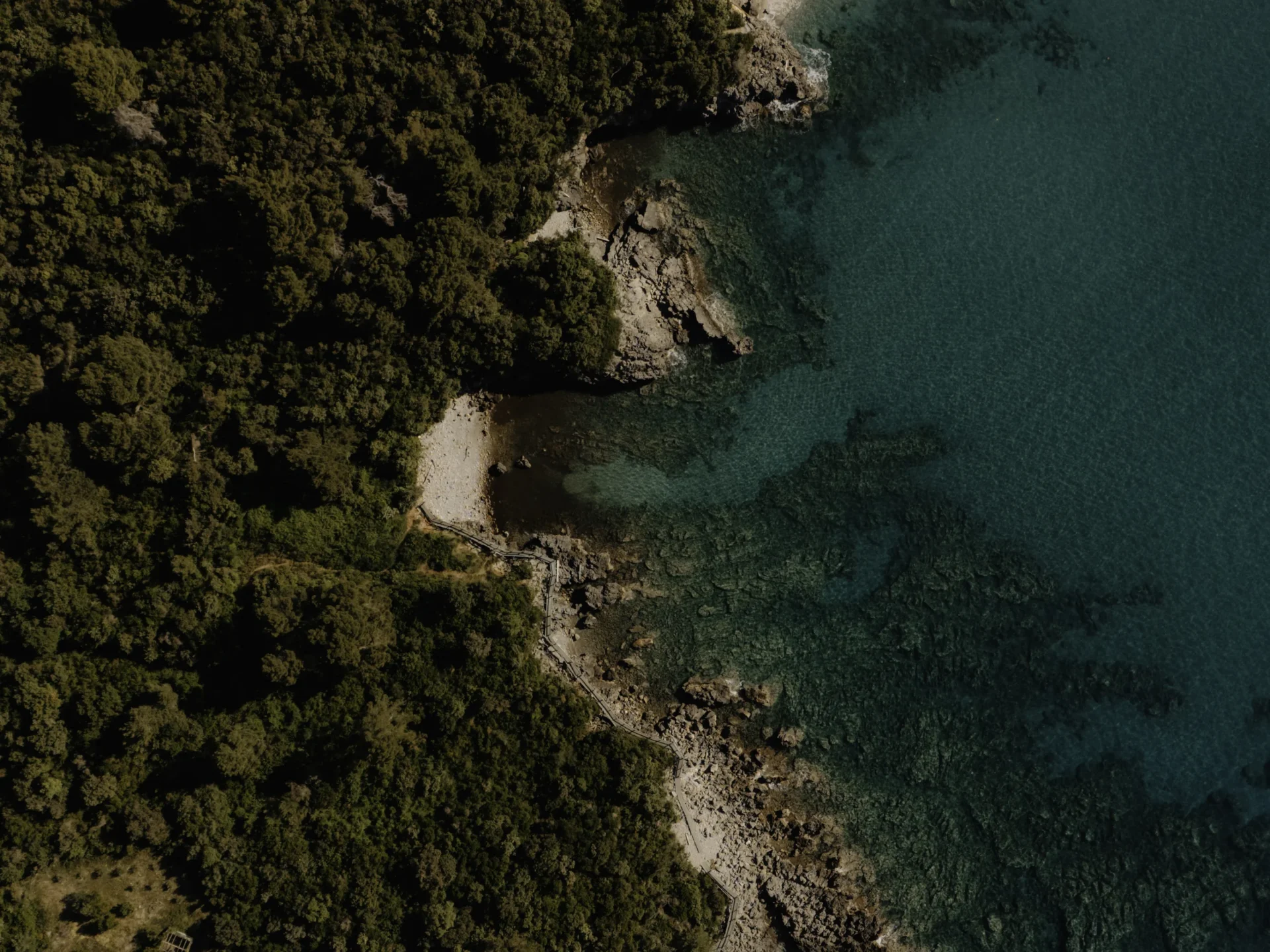
On a morning walk from Luštica Bay’s salt-misted shoreline up to The Peaks, the landscape reveals itself through scents as old as time.
Marina Village’s prelude of salt and stone
From Marina Beach, a wisp of salt is first perceived. It lingers upon the skin and within the hair, returning one to early memories of seaside holidays. This mineral tang is interwoven with the waft of sun-baked algae and warm stone, forming the fundamental, grounding note of Luštica Bay.
As one moves away from the shoreline, the scents shift and layer themselves, mirroring the ascending landscape.
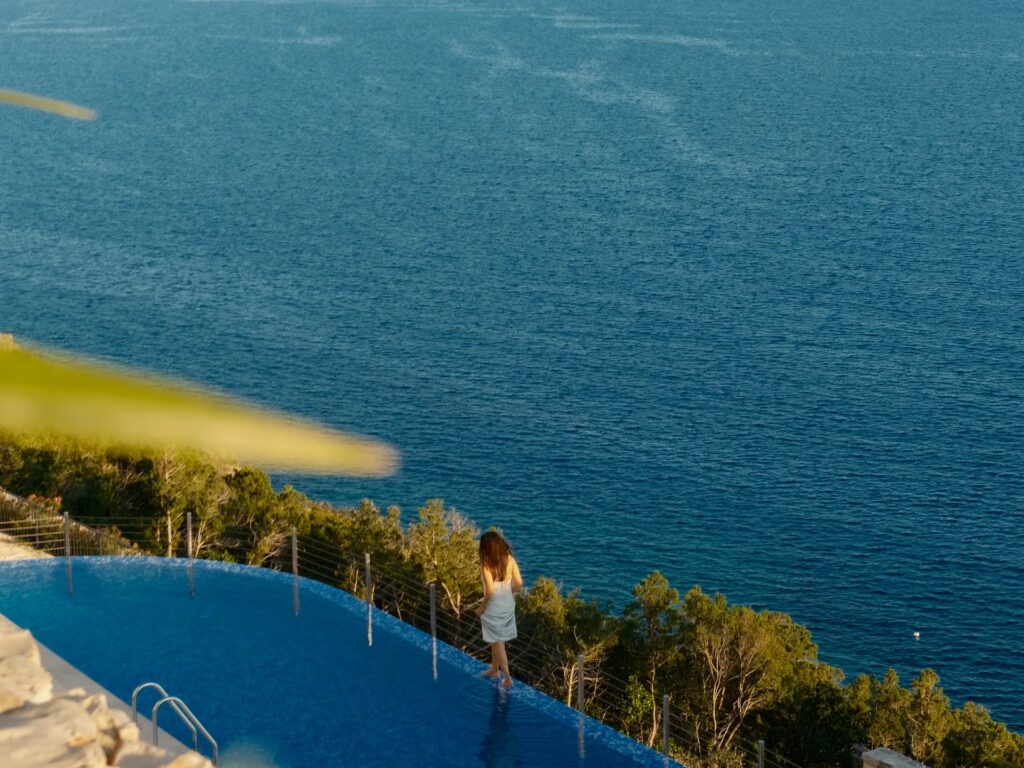
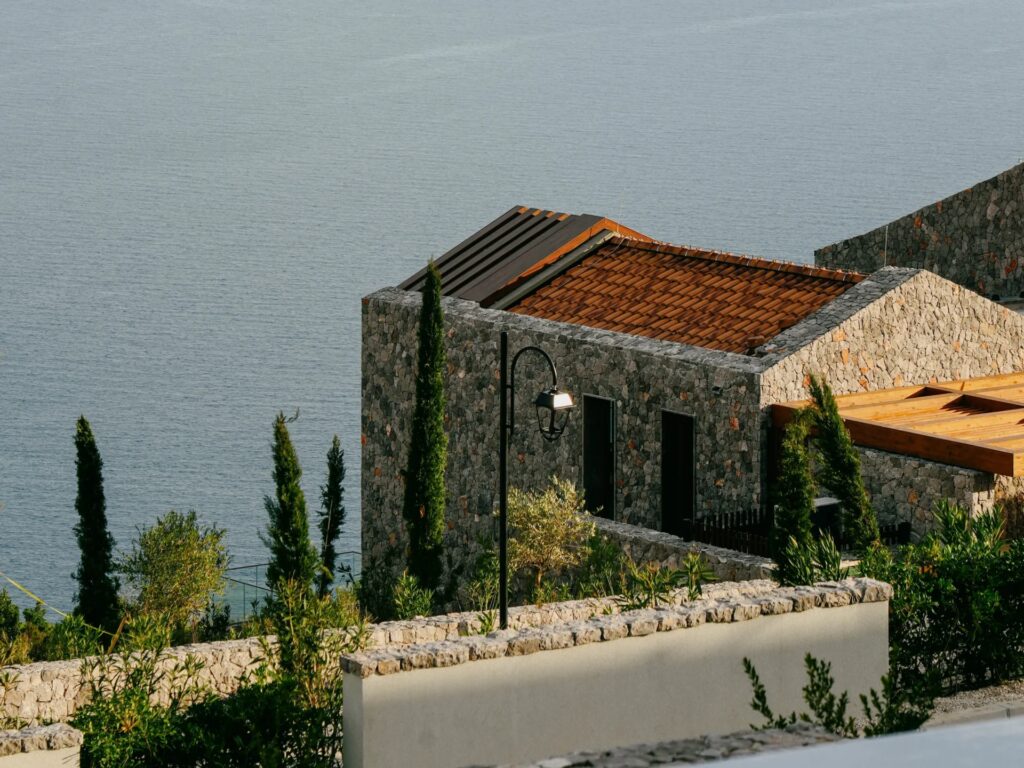
In Marina Village, the air is defined by the olive and strawberry tree. The olive tree stands as a symbol of endurance and rootedness, while the strawberry tree reveals the untamed soul of the terrain. With the intention to preserve and accentuate nature, surrounding you is a careful selection of plants that have always grown here, autochthonous species that have adapted to sun, stone and drought.
The sun is responsible for everything here, as are the warm days that accompany the turning of the seasons. The year’s overture is found in the spring efflorescence of mimosa with its powdery balm, in the Judas tree with its pink-purple blooms, and in the yellow spurges that cover the landscape. The promenade is dominated by jasmine, alongside the blossoming of citrus which floods the streets with a light freshness.

As summer’s temperatures rise, drought-resistant, hard-leaved plants release their essential oils into the air. The incense begins with immortelle – dry, warm and almost dusty. Rosemary follows, its trace lingering throughout the day when brushed or rubbed between the fingers, then sage, discreet in appearance yet intense in the impression it imparts. Jasmine finishes our time here.
Owing to the Luštica microclimate and the soil from which it emerges, jasmine carries a stronger and fuller body than you will have previously experienced. Pleasingly, its notes remain remembered long after one’s departure.
As one moves away from the shoreline, the scents shift and layer themselves, mirroring the ascending landscape.
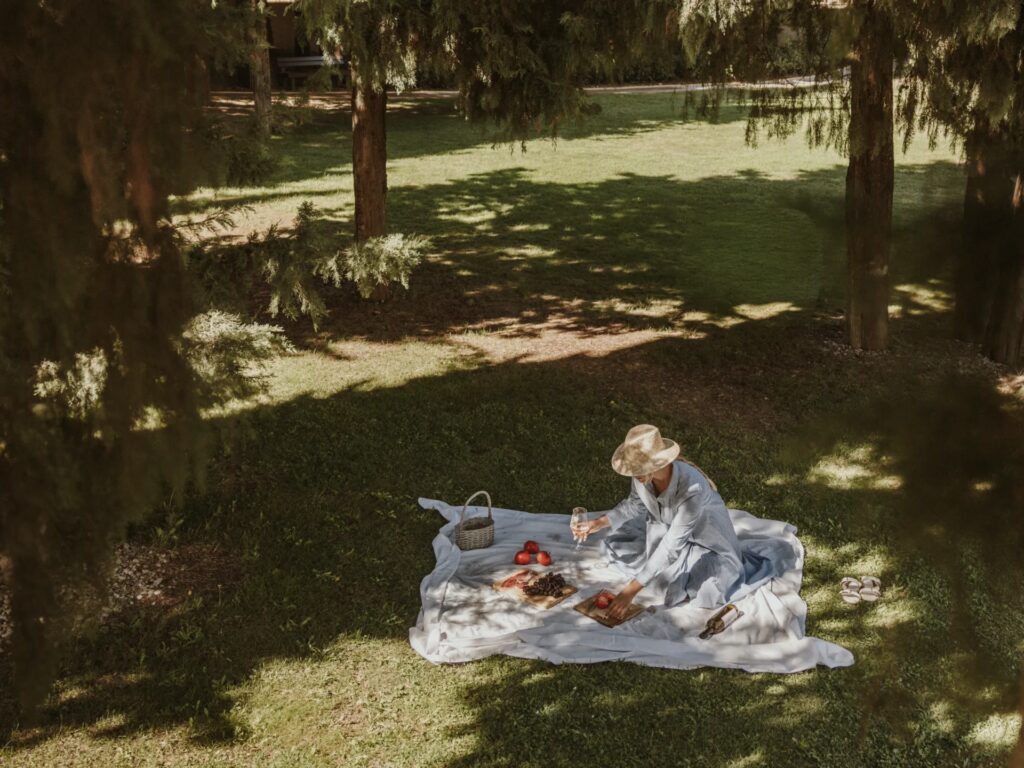
Centrale’s resilience amid ancient resin
Our walk continues towards the Centrale neighbourhood and, as the aesthetic changes, so too does the landscape and its scent. Both adapt to their surroundings and new environment.
Here, the past dominates in its most magnificent preservation: tall cypress and pine trees have stood in this place longer than most can imagine. They remain steadfast, with no intention of leaving. Their resin melts each year beneath the summer sun, releasing that recognisable, almost soothing Mediterranean bouquet, while cicadas in the background perform the most evocative summer melodies.
The trees’ cologne is quieter than that produced by aromatic herbs yet long-lasting. Like a shadow that follows, it enters the nostrils and only departs the following day once it has been slept through.
In this sense, Centrale exhales stability. Of shade. Of stillness. Of a place that breathes more slowly.
The Peaks’ sky-bound lawns
Our journey continues uphill towards the golf course and The Peaks. Suddenly there is openness, elevation, and the air once again changes its character, revealing a different nature. It becomes lighter, with everything laid out as if in the palm of one’s hand.
The carefully maintained grass is denser than elsewhere and thus carries a clean, fresh and soft trace. Manicured lawns bear the familiar and calming note of summer, yet what renders the golf course at Luštica Bay unique is the environment that embraces them on all sides.
From the east, the gentle breath of the Adriatic’s pearl, the Bay of Kotor. From the west, the open sea and an infinite horizon. From the north, the slopes of Lovćen look over us, sending a breeze that lowers the temperature by a degree or two, aided by nearby Vrmac and Orjen. The fragrant currents from the southern hinterland’s maquis build on our own, conversing, never competing.
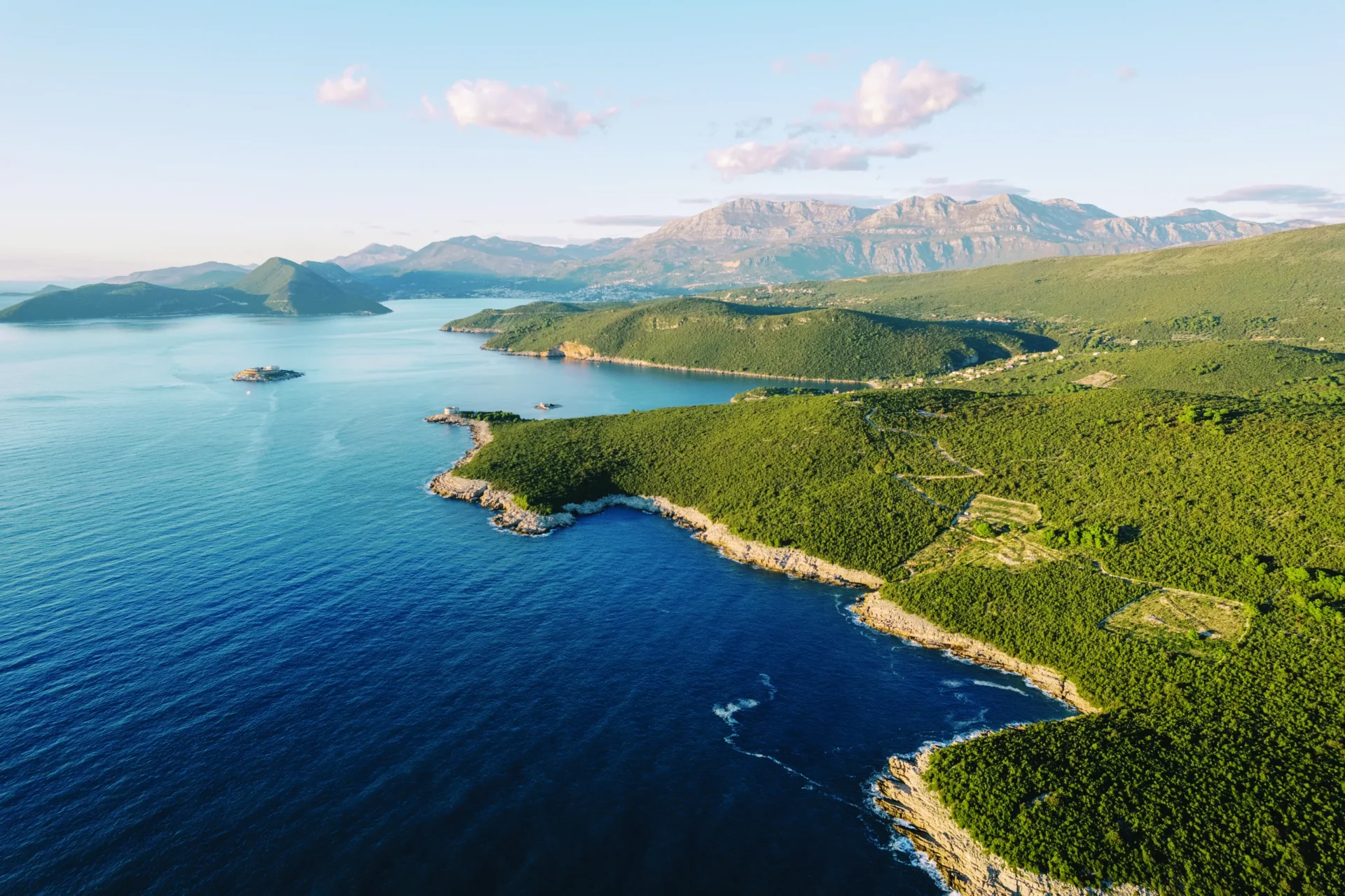
The air is an interlacing infusion. A play of sea, land, plants and the shifting sun. It is the salt on your skin meeting the resin in the haze.
The scents you carry home
Wherever a walk takes you, in truth, there is no single flower, plant, or tree by which Luštica Bay and its peninsula can be defined. You cannot point to one branch or one blossom and exclaim that you’ve found the source.
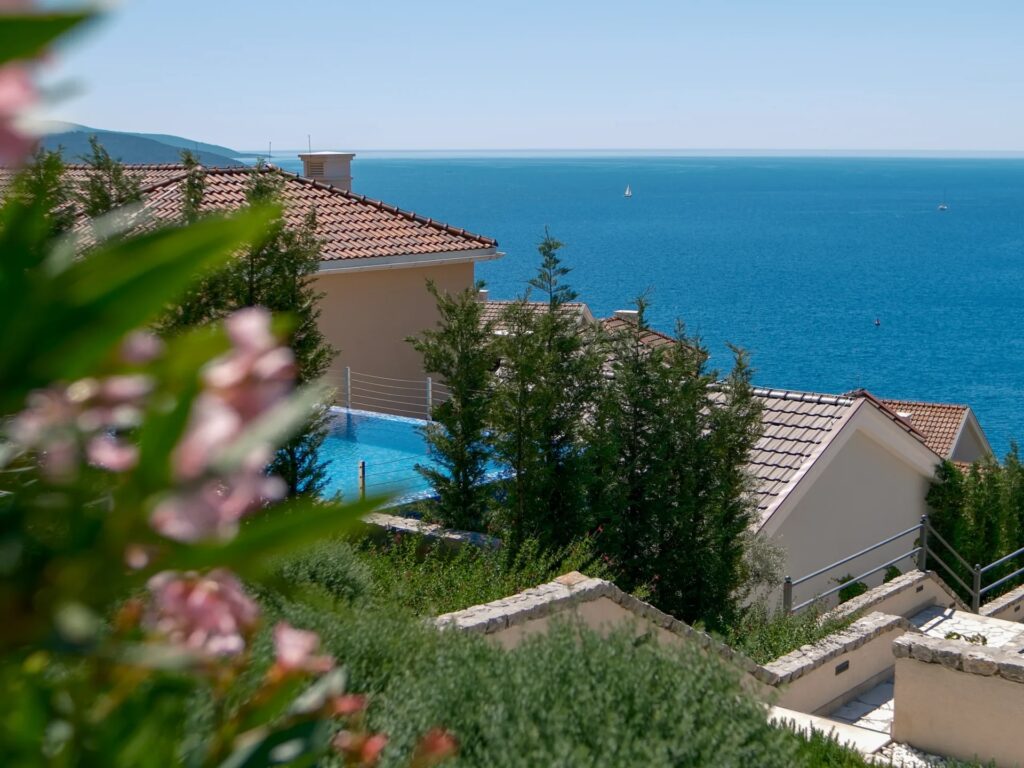
It is impossible to leave these shores with only one distinct scent. Instead, you leave with a breath of the whole peninsula. These aromas do not vanish as you travel away, but settle into memory, surfacing months later at the mention of the sea. They are the quiet, persistent ghosts of the landscape. A permanent part of who you have become.
The Maquis
Maquis (macchia) is a dense, evergreen Mediterranean vegetation that blankets the landscape. Composed of shrub species that are adapted to dry summers and mild winters – most notably the strawberry tree, spruce, and Spanish broom – it serves as the peninsula’s wild signature. Growing freely along the slopes and within olive groves, it is a habitat for numerous species and shapes the visual and olfactory identity of the entrance to the Bay of Kotor.
On the Luštica Peninsula, a day begins not with a view but with a scent. Before the eyes adjust to the light, your nose is greeted by an ancient aromatic language.
In this world, Luštica Bay is a natural oasis whose reigning vegetation is the maquis – a dense, low-growing Mediterranean woodland composed of hardy, evergreen plants. Within this tangled green tapestry, several ‘voices’ rise: the oak – indestructible, enduring and proud – provides the most exquisite summer shade; the laurel, whose pale green leaves are the foundation of Mediterranean cuisine; the cypress, slender and poised, a dark-green model of form in whichever forest it stands; and broom, a shrub with vivid yellow blossoms that serves as a literal note of sunlight within the greenery.
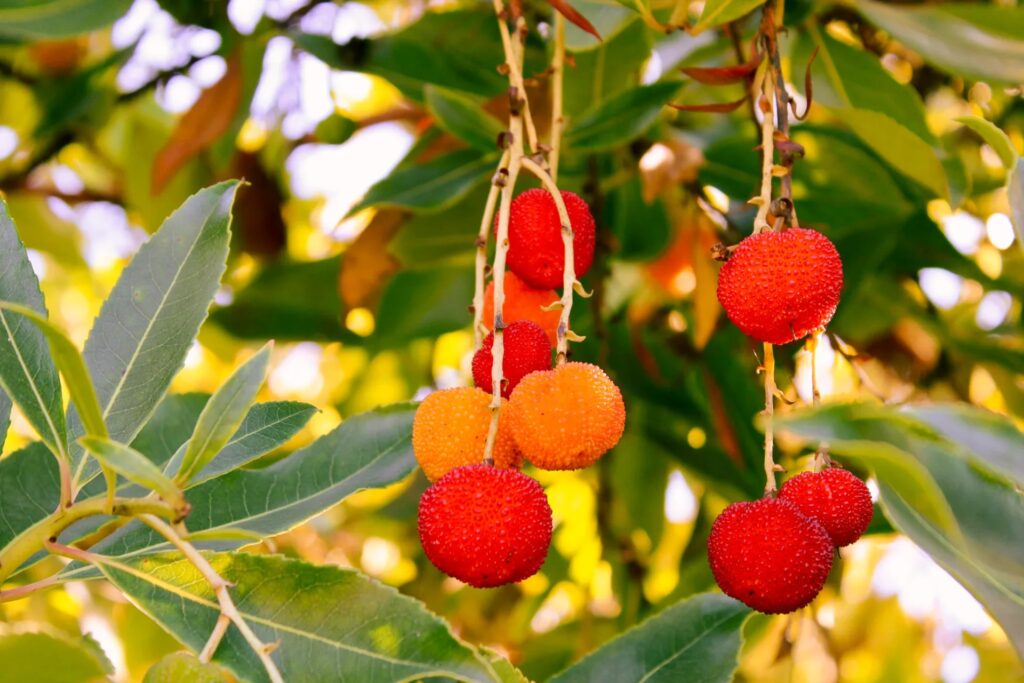
Finally, there is the magnificent strawberry tree, an evergreen unlike any other which, as summer yields to autumn, offers orange-red fruits that lend a rich, visual character to the Luštica maquis.
In the early morning hours, while the sea has not yet turned blue and the stone remains warm beneath the fingers, the maquis’ scents begin to show off. Blended with a saline cloud and freshly watered earth, its plants awaken beneath the slowly rising sun, inviting you on a walk that enchants like no other.
The strawberry tree
Known locally as maginja or planika, the strawberry tree (Arbutus unedo) is an evergreen shrub renowned for its distinctive red fruits that ripen in late autumn. These edible berries are sweet with a slightly astringent note, resembling strawberries in appearance. Rich in vitamin C, the fruits are a staple for local jams, liqueurs, and a potent brandy called rakija. Growing typically within the maquis, its glossy leaves and vivid orange-to-red November berries are often described as being ‘as sweet as sunlight.’