


Sailing in Montenegro offers a distinct perspective on the Adriatic. The coastline is more compact than in neighbouring destinations, transitions between locations are quicker, and the overall rhythm feels more considered. Rather than long open-water passages between distant islands, sailing here is defined by shorter routes, varied scenery, and the ability to easily combine time at sea with time on land.
From the open Adriatic to the enclosed waters of the Bay of Kotor, the landscape shifts dramatically within a relatively small distance. This contrast shapes the entire experience. A single itinerary can include historic towns, quiet coves, and mountain-backed bays – all within just a few days of sailing.
For visitors planning a sailing trip, Montenegro rewards flexible, well-paced routes where sailing becomes part of a broader coastal journey rather than the sole focus of the holiday.
TABLE OF CONTENTS
Is Montenegro Good for Sailing?
Montenegro is a strong sailing destination, particularly for travellers who prefer shorter distances, varied scenery, and a more relaxed pace on the water.
It does not compete with larger Mediterranean sailing regions in terms of scale or number of islands, but that is not its strength. Instead, it offers a more compact and efficient sailing environment where each day can include multiple stops without long passages or complex navigation.
The atmosphere is generally less crowded than in many neighbouring countries. Even in peak summer, the sailing experience remains more contained, with a stronger sense of space and flexibility on the water.
This makes Montenegro especially suitable for:
- 3–5 day sailing itineraries
- relaxed coastal cruising
- mixed sailing and land-based holidays
- first-time Adriatic sailing experiences with skipper support
What Makes Sailing in Montenegro Different
Several defining characteristics shape sailing in Montenegro and set it apart from other Adriatic routes.
The geography is the most immediate difference. Entering <u>Kotor and the Bay of Kotor (toponym page)</u> introduces a completely different environment, where the sea narrows into calm, protected waters framed by steep mountains. Historic towns appear along the shoreline, creating a sense of depth and scale that goes beyond typical coastal cruising.
The compact nature of the coastline also plays a significant role. Routes can be adapted easily, and multiple stops can be included within a single day without compromising the overall experience. This flexibility allows for a more relaxed pace, which is often not possible in larger sailing regions.
Equally important is the connection between sea and land. Montenegro is not purely a sailing destination. Cultural sites, national parks, and inland towns are all within close reach, allowing sailing itineraries to feel more varied and complete.
When Is the Best Time to Sail
Seasonality defines the quality of the sailing experience, and the differences between months are noticeable both on the water and ashore.
| Month | Conditions | Experience |
| May | Mild, quieter | Early season, peaceful sailing |
| June | Warm, stable | One of the best overall months |
| July | Hot, active | Busy but good conditions |
| August | Very hot, peak traffic | High season, limited flexibility |
| September | Warm, calm | Best balance of weather and crowds |
| October | Mild, quieter | Slower, relaxed sailing |
June and September consistently offer the most balanced conditions. Temperatures are comfortable, the sea is warm, and the overall pace remains more controlled than during peak summer.
These months allow for greater flexibility, both in route planning and marina availability, which significantly improves the overall experience.
When to Avoid Sailing
While Montenegro is generally accessible for sailing, certain periods require more careful planning.
August is the most demanding month. Marinas operate at capacity, coastal towns become significantly busier, and securing berths without prior booking can be challenging. The experience shifts from relaxed to high-energy, which may not suit all visitors.
Midday conditions in July and August also require adjustment. Heat builds quickly, and longer sailing stretches during the middle of the day can become uncomfortable. Most well-planned itineraries account for this by favouring early departures and later arrivals.
Late autumn introduces more variability. While conditions can still be pleasant, weather patterns become less predictable and services more limited.
Popular Sailing Routes in Montenegro
The relatively short coastline allows for compact and well-structured routes that prioritise quality over distance. Rather than covering large areas, the focus is on selecting stops that offer contrast.
A typical 3–5 day route looks like this:
Suggested Route
Stops such as Perast, Budva, and Sveti Stefan create a natural progression from calm, historic environments to more open coastal areas. This variation is one of the defining strengths of sailing in Montenegro.
Where to Start Your Sailing Trip
Most sailing itineraries begin within the Bay of Kotor, where access is straightforward and infrastructure is well developed. Tivat serves as a primary starting point, offering marina facilities and direct access to both the inner bay and the open Adriatic.
Starting here provides flexibility. Routes can move deeper into the bay or extend along the coastline without requiring long repositioning sails. For shorter itineraries in particular, this efficiency makes a noticeable difference.
Marina Life, Berthing and Day Sailing Options
Not every visitor approaches Montenegro as a continuous sailing journey. Many now prefer a fixed base, using marinas as a hub for both berthing and flexible day sailing.
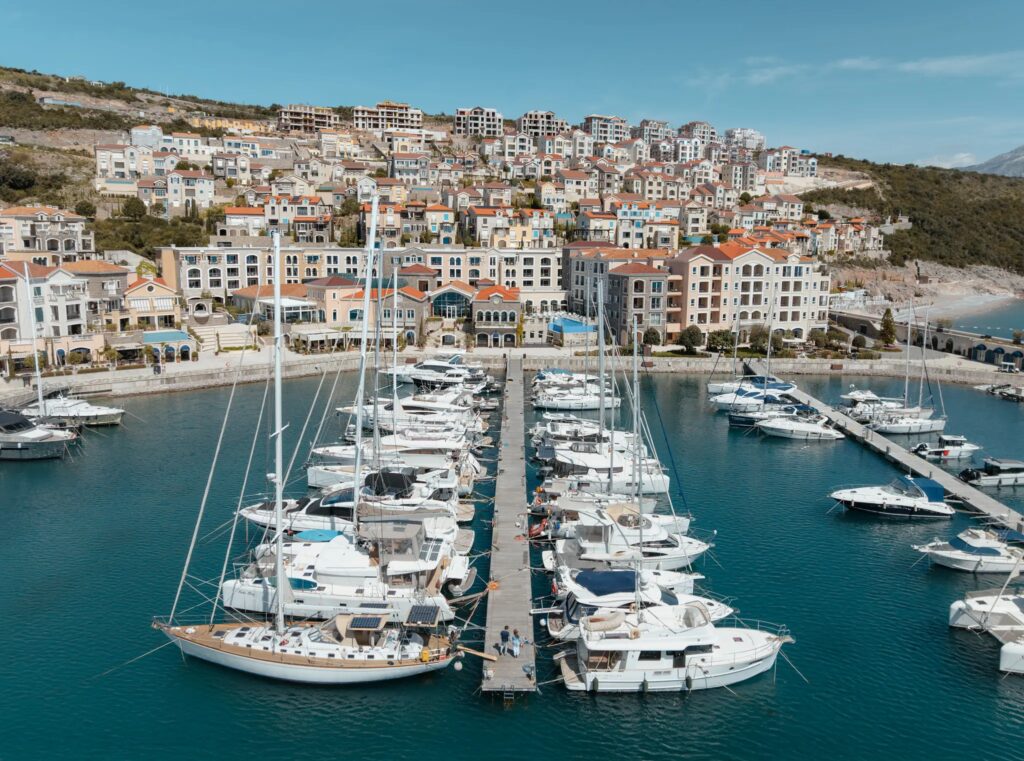
Berthing infrastructure is concentrated in the Bay of Kotor, where natural shelter ensures stable conditions throughout the season. Modern marina developments here have also raised service standards, integrating sailing into a broader coastal lifestyle.
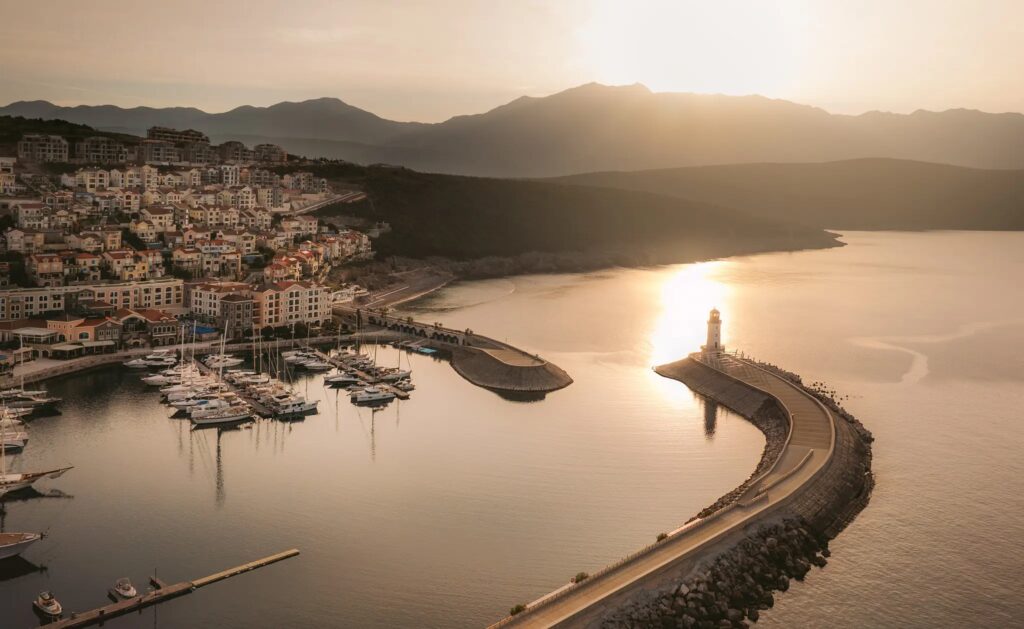
At Luštica Bay Marina, this approach is fully supported. The marina accommodates a range of vessels for both short and long stays, while its outer-bay location provides fast access to the open Adriatic, making shorter sailing windows more efficient.
From here, key routes are easily reached without extended repositioning, including:
- Kotor and the Bay of Kotor for sheltered cruising and historic exploration
- The coastline towards Budva for more open Adriatic sailing and scenic coastal passages
Many visitors choose to stay based in one marina and explore the coast through private charters or day sailing. This creates a balanced rhythm between time at sea and access to restaurants, beaches, and resort amenities onshore.
Internal link: Luštica Bay Marina berthing
Winds and Sailing Conditions in Montenegro
Wind conditions are generally predictable but should be considered in daily planning.
Bora (NE wind)
A cold, dry wind descending from inland mountains. It can arrive suddenly and create short, gusty conditions, particularly outside sheltered bays.
Jugo (SE wind)
A warm, humid wind bringing longer swell. It develops gradually and can last several days, affecting exposed coastline more than the Bay of Kotor.
Maestral (NW wind)
The dominant summer sailing wind. It typically builds during the day and weakens in the evening, providing ideal conditions for coastal cruising.
Overall, sailing in Montenegro is defined less by constant wind strength and more by timing, positioning, and shelter selection.
Anchoring and Mooring in Montenegro
Anchoring is generally straightforward, but it becomes more structured during peak summer when coastal zones are shared between yachts, marinas, and local traffic. Understanding where you can anchor – and where you shouldn’t – is key to avoiding unnecessary repositioning.
The Bay of Kotor offers excellent holding but includes designated restrictions near towns and busy waterfront areas.
Popular anchoring zones:
- Luštica Peninsula coves -sheltered, clear water, typically used for relaxed overnight stays or swimming stops when conditions are stable
- Perast outskirts -highly scenic anchorage, but limited positioning due to proximity to protected town and navigation corridors
- Sveti Stefan approaches -more exposed, best used only in calm conditions or as a short stop rather than a committed overnight anchorage
Marina-required locations:
- Budva during peak season -high traffic and limited safe anchoring space close to shore
- Tivat (Porto Montenegro) -structured marina environment with controlled berthing
- Kotor waterfront -restricted due to cruise ship movements and ferry operations
In reality, most crews adjust anchoring plans daily based on wind shifts, local congestion, and marina availability rather than following fixed overnight routes.
A mix of free anchoring zones, mooring buoys, and restaurant-based moorings is common throughout the coast, especially around the Luštica Peninsula and smaller inlets. Flexibility is essential, as availability and conditions can change noticeably between early and late summer days.
Combining Sailing with Inland Experiences
One of Montenegro’s strongest advantages is the proximity of inland destinations. Unlike island-based destinations, key cultural and natural sites are located within a short distance from the coast.
From the bay, it is possible to reach Lovćen National Park within a relatively short drive, offering panoramic views and a completely different landscape.
Historic towns such as Cetinje add cultural depth, making it easy to build itineraries that combine:
- sailing days
- cultural visits
- mountain excursions
This proximity allows for more varied itineraries. A day can begin on the water, continue with inland exploration, and return to the coast without requiring significant travel. The result is a more complete and balanced experience.
Practical Considerations
A valid sailing license is required for bareboat charter. Skippers are widely available and often recommended for first-time visitors or shorter itineraries.
Summer conditions are generally stable, with calm seas and short distances between destinations. This makes Montenegro accessible even for less experienced sailors, especially with professional support.
Charter Costs and Vessel Types in Montenegro
Indicative weekly costs:
Vessel choice:
A 40–45 ft vessel is typically the most practical size for 3–5 day itineraries, balancing comfort, handling, and access to both sheltered bays and open Adriatic routes.
| Feature | Monohull | Catamaran |
| Stability | Medium | High |
| Space | Standard | Large |
| Bay of Kotor | Good | Excellent |
| Open Adriatic | Best | Good |
| Comfort | Medium | High |
In practice, the choice between a monohull and a catamaran in Montenegro is less about performance alone and more about how you plan to experience the coastline.
Monohulls tend to suit sailors who prefer a more traditional sailing feel and stronger performance on open Adriatic passages. Catamarans, on the other hand, are often chosen for relaxed cruising, especially in the Bay of Kotor where stability, space, and comfort at anchor make a noticeable difference. For most 3–5 day itineraries, both work well, and the decision usually comes down to whether priority is placed on sailing performance or onboard living comfort.
Frequently Asked Questions
Is Montenegro good for sailing holidays?
Yes, particularly for shorter, scenic routes that combine time on the water with time on land.
How does Montenegro compare to Croatia for sailing?
Montenegro is smaller and less crowded, offering a more compact and manageable experience.
Do you need a license to sail in Montenegro?
Yes, for bareboat charters. A skipper can be hired if needed.
What is the best month to sail in Montenegro?
June and September offer the best overall conditions.
Can beginners sail in Montenegro?
Yes. Conditions are generally calm, and routes are manageable, especially with a skipper.